The Short Answer
Not directly. Ordinary dandruff does not cause permanent hair loss. Severe dandruff or seborrheic dermatitis can inflame the scalp, though, and the itching and scratching it triggers can break hairs and increase shedding. That loss is usually temporary and improves once the flaking is controlled. Gradual thinning at the crown or part is more likely pattern hair loss.
Top Picks: Best Ketoconazole Shampoo
 Check Price
Best Overall
Nizoral Anti-Dandruff Shampoo with 1% Ketoconazole, Fresh Scent (7 fl oz)
 Check Price
Best Value
Nizoral Anti-Dandruff Shampoo with 1% Ketoconazole, Peppermint Scent (14 oz)
 Check Price
Best Rotation Partner
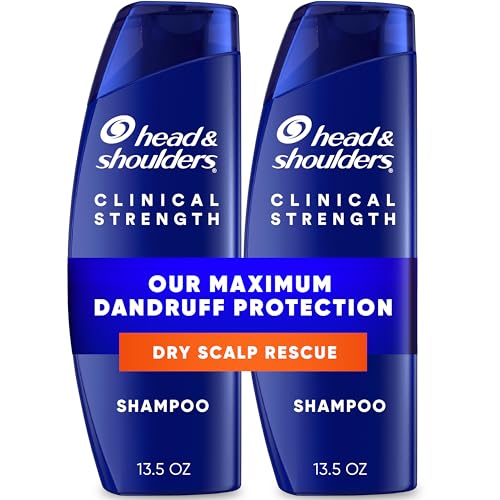
Head & Shoulders Clinical Strength Dry Scalp Rescue Shampoo, 1% Selenium Sulfide (Twin Pack)
Written by HairGrowthReviews Editorial Team
Reviewed by Ernesta Malinauskytė, PhD, Director of Hair Research, TRI Princeton
Updated 2026-10-14 · Independently researched · How we review
We may earn a commission when you buy through our links, at no cost to you. As an Amazon Associate we earn from qualifying purchases. How we research
The Short Version
- Dandruff does not destroy hair follicles and does not cause pattern baldness.
- Severe dandruff and seborrheic dermatitis can cause inflammation, itching and scratching, which can lead to breakage and temporary extra shedding.
- Dandruff and pattern hair loss are both common, so many people have both at once without one causing the other.
- Antifungal shampoos such as 1% ketoconazole control most dandruff; give a routine four to eight weeks.
- Patchy loss, broken hairs with scaling in children, pain, pus or scarring need a doctor, because they suggest a different condition.
On This Page · 11 sections
Does dandruff cause hair loss? It is an understandable worry. You notice flakes on your shoulders, an itchy scalp, and at the same time more hair in the shower or a part that looks wider than it used to. It feels natural to connect the two, and plenty of shampoo marketing encourages you to.
The reality is more reassuring, with a few important caveats. Ordinary dandruff is a surface problem: skin cells shedding faster than usual in response to a yeast that lives on everyone's scalp. It does not damage the hair follicle itself. But when dandruff becomes severe, or tips over into seborrheic dermatitis, the inflammation and the scratching that comes with it can cause hair to break and shed more than usual for a while.
This article explains what dandruff actually is, the ways it can and cannot affect your hair, how to tell dandruff-related shedding from pattern hair loss, the scalp conditions that look like dandruff but do cause hair loss, and how to treat a flaky scalp effectively. For the products themselves, see our guide to the best ketoconazole shampoo.
What Dandruff Actually Is
Dandruff is visible flaking of the scalp, usually with some itch. Its main driver is Malassezia, a yeast that lives on almost everyone's skin and feeds on scalp oil. In people who are sensitive to it, the yeast and the byproducts it releases irritate the skin, which responds by turning over cells faster. Those cells clump together into the white or yellowish flakes you see.
Seborrheic dermatitis is the more inflamed end of the same spectrum. Alongside flaking, there is redness, greasy yellow scale and often itching, and it can spread beyond the scalp to the eyebrows, the sides of the nose, behind the ears and the chest. Dandruff is often described as a mild form of seborrheic dermatitis limited to the scalp.
all of this happens in the top layers of the skin.
Several things tend to make dandruff worse: oily skin, infrequent washing, stress, cold dry weather, and some medical conditions that affect the immune or nervous system. It is not caused by poor hygiene, and it is not contagious, although washing more regularly often helps.
Importantly, all of this happens in the top layers of the skin. The hair follicle sits deeper, and in ordinary dandruff it is not the target. That is the main reason dandruff on its own does not cause lasting hair loss.
How Dandruff Can Affect Your Hair
Although dandruff does not destroy follicles, it can affect hair in three indirect ways. The first is scratching. An itchy scalp gets scratched, often without you noticing, and repeated scratching with nails can break hair shafts and damage the skin. That shows up as short broken hairs and sometimes small sore spots.
The second is inflammation. In more severe dandruff and seborrheic dermatitis, the scalp is red and irritated rather than just flaky. Inflammation in the skin around the hair can disturb the normal hair cycle and contribute to temporary extra shedding. Dermatologists generally describe this kind of shedding as reversible once the inflammation is brought under control.
the effect on hair is something that improves when the scalp is treated.
The third is the scale itself. Thick, stuck-on scale can make the scalp tight and uncomfortable, and some people pick at it, pulling out hairs along with the flakes. Heavy scale also gets in the way of anything you apply to the scalp, including treatments such as minoxidil.
In all three cases, the effect on hair is something that improves when the scalp is treated. There is no good evidence that dandruff permanently reduces the number of hair follicles or causes the kind of progressive thinning seen in pattern hair loss.
Dandruff vs. Pattern Hair Loss: Why They Get Confused
Dandruff and pattern hair loss are both very common in adults, so it is no surprise that many people have both at the same time. When two common things happen together, it is easy to assume one causes the other, but in most cases they are simply running side by side.
Pattern hair loss, also called androgenetic alopecia, is driven by genetics and the hormone DHT acting on sensitive follicles. Over years, those follicles shrink and produce thinner, shorter hairs. In men, it typically shows as a receding hairline and thinning crown. In women, it usually shows as diffuse thinning along the part and across the top of the scalp.
There is some research interest in whether scalp inflammation, including from Malassezia, might play a supporting role in pattern hair loss, and that is part of why ketoconazole shampoo is popular as a hair loss add-on. But the evidence is limited, and dandruff is not considered a cause of pattern baldness. Treating dandruff will not reverse pattern thinning on its own.
The practical point is to treat each problem with the right tool. An antifungal shampoo controls dandruff. Pattern hair loss needs a treatment with real evidence behind it, such as minoxidil, or for men a conversation with a doctor about finasteride.
| Dandruff-Related Shedding | Pattern Hair Loss | |
|---|---|---|
| Main cause | Scalp inflammation and scratching | Genetics and DHT |
| How it looks | Flakes, itch, broken or shed hairs | Gradual thinning in a pattern |
| Where | Wherever the scalp is inflamed | Hairline, crown, part or top |
| Speed | Flares and settles | Slow, over months and years |
| Reversible? | Usually, once the scalp is treated | Needs ongoing treatment to slow or regrow |
How to Tell What Is Causing Your Hair Loss
Start with the timing. If extra shedding started at the same time as a bad flare of flaking and itching, and eases when your scalp calms down, dandruff-related irritation is a likely contributor. If your hair has been getting gradually thinner over months or years regardless of how your scalp feels, pattern hair loss is more likely.
Look at the hairs. Short, snapped hairs of varying lengths point toward breakage from scratching or rough handling. Full-length hairs with a small pale bulb at the root are shed hairs from the resting phase. Thinner, finer hairs in a particular area, especially at the crown or along the part, are a typical sign of pattern hair loss.
Short, snapped hairs of varying lengths point toward breakage from scratching or rough handling.
Look at the pattern. Dandruff tends to cause diffuse, mild changes wherever the scalp is irritated. Pattern loss follows recognizable shapes. Round, smooth bald patches, by contrast, suggest alopecia areata, which is neither dandruff nor pattern loss and needs its own treatment.
Count the possibilities. Hair shedding has many causes, including recent illness, stress, childbirth, crash dieting, low iron stores, thyroid problems and some medications. If you are not sure, a dermatologist can examine your scalp, often with a magnifying device, and order blood tests where needed. That is far quicker than guessing with shampoos.
Our #1 pick for ketoconazole shampoo
Nizoral Anti-Dandruff Shampoo with 1% Ketoconazole, Fresh Scent (7 fl oz)
The ketoconazole shampoo to start with. Proven for dandruff and a sensible add-on to a hair loss routine.
Scalp Conditions That Look Like Dandruff but Do Cause Hair Loss
Some conditions produce flaking or scale that is easy to mistake for dandruff but behave very differently. Tinea capitis, a fungal infection of the scalp and hair shafts, is the most important one. It is most common in children and causes scaly patches with broken hairs and hair loss. It needs prescription antifungal treatment taken by mouth, because shampoos alone do not clear it.
Scalp psoriasis causes thick, silvery, well-defined plaques that often extend past the hairline. It can be very itchy, and heavy scale plus scratching can lead to temporary hair loss. Psoriasis needs different treatment from dandruff, so a proper diagnosis matters.
Folliculitis, an inflammation of the follicles, causes small red bumps or pustules that can be tender. Contact dermatitis from hair dye, fragrance or other product ingredients causes redness, itching and sometimes flaking after exposure. Both can disturb hair if they persist.
Less commonly, some scarring forms of hair loss begin with redness and scale around individual follicles, along with itching or burning. Because scarring can permanently destroy follicles, any flaky scalp with pain, burning, shiny patches or steadily spreading bald areas should be seen by a dermatologist promptly.
How to Treat Dandruff and Protect Your Hair
Most dandruff responds well to over-the-counter medicated shampoos. Ketoconazole, an antifungal sold as 1% Nizoral, targets Malassezia directly. Selenium sulfide and zinc pyrithione shampoos are effective alternatives, and salicylic acid shampoos help loosen thick scale so the antifungal can reach the skin.
How you use the shampoo matters as much as which one you choose. Massage it into the scalp rather than the lengths, and leave the lather on for several minutes before rinsing. The Nizoral label directs use every three to four days for up to eight weeks, then as needed. Many people settle on two or three medicated washes a week, with a gentle shampoo in between.
How you use the shampoo matters as much as which one you choose.
Rotating actives is a common strategy for dandruff that keeps returning. Alternating ketoconazole with a selenium sulfide or zinc pyrithione shampoo can help keep flaking under control over the long term. Give any new routine four to eight weeks before judging it.
Protect your hair while you treat your scalp. Try not to scratch, keep nails short, and avoid picking at scale. Be gentle when brushing, and limit harsh styling and high heat while your scalp is irritated. If your scalp is still red, flaky or itchy after a couple of months of consistent treatment, see a dermatologist, as prescription antifungals and short courses of anti-inflammatory treatment are available.
Dandruff and Hair Loss Myths Worth Dropping
One common belief is that flakes clog the follicles and suffocate the hair. Follicles do not breathe through the scalp surface, and flakes sit on top of the skin rather than plugging the root. Heavy scale can be uncomfortable and get in the way of topical treatments, but it does not starve hair of air.
Another is that washing less protects your hair if you are shedding. In fact, infrequent washing lets oil build up, which feeds Malassezia and can make dandruff worse. The hairs you see in the drain on wash days are mostly ones that were already shed and caught in your hair; skipping washes just means you lose them later.
Follicles do not breathe through the scalp surface
A third is that oiling the scalp cures dandruff. Because Malassezia feeds on oils, heavy plant oils left on the scalp can sometimes make flaking worse rather than better. If you like oil treatments for your lengths, keep them away from the scalp while you are dealing with dandruff, and wash them out thoroughly.
The last is that any shampoo marketed for hair loss will fix both problems at once. Most growth-focused shampoos do little for dandruff unless they contain a proven antifungal, and no shampoo has the evidence for regrowth that minoxidil has. Choose a medicated shampoo for the scalp, and a proven treatment for the hair.
If You Have Dandruff and Thinning Hair
Many people deal with both at once, and the two treatments fit together well. Controlling dandruff makes your scalp more comfortable and makes hair loss treatments easier to tolerate and apply. A flaky, itchy scalp is a poor starting point for anything you have to apply every day.
If you use minoxidil, wash with your medicated shampoo first, let your scalp dry completely, and then apply minoxidil. Avoid washing again for several hours after applying it, or you will rinse away the dose. Some people find that liquid minoxidil containing propylene glycol makes flaking worse; a propylene glycol-free foam often helps.
Ketoconazole is often used as part of a hair loss routine as well as for dandruff. Small studies, mostly of the 2% prescription strength, suggest it may modestly help hair density, but it is not an approved regrowth treatment. Think of it as a supporting step alongside minoxidil, not a substitute.
If your hair loss is sudden, patchy or heavy, or you are not sure whether your flaking is dandruff at all, get a diagnosis before building a routine. A dermatologist can tell you whether you are dealing with dandruff, pattern loss, both, or something else entirely.
Frequently Asked Questions
Can seborrheic dermatitis cause hair loss?
It can contribute to temporary hair loss. The inflammation, itching and scratching that come with seborrheic dermatitis can increase shedding and break hairs. That loss is usually reversible once the condition is controlled with medicated shampoos or, if needed, prescription treatment from a dermatologist.
Will my hair grow back after treating dandruff?
If your hair loss was caused by dandruff-related inflammation or scratching, it usually grows back once the scalp settles, though regrowth takes a few months because of the hair cycle. If the thinning continues after your scalp is clear, pattern hair loss or another cause is more likely.
Can scratching an itchy scalp cause hair loss?
Yes. Repeated scratching can snap hair shafts and irritate the skin, leading to short broken hairs and extra shedding. Keeping nails short, treating the cause of the itch and avoiding picking at scale all help. Persistent itch is worth getting checked if shampoos do not settle it.
Does dandruff cause baldness?
No. Dandruff does not cause pattern baldness. Pattern hair loss is driven by genetics and DHT. Because both conditions are very common, many people have them together, but treating dandruff alone will not stop pattern thinning. Minoxidil and, for men, finasteride are the evidence-based treatments for that.
Is dry scalp the same as dandruff?
Not quite. Dry scalp tends to produce small, fine, white flakes and feels tight, often worse in cold weather or after harsh washing. Dandruff flakes are often larger and oilier and come with itch. Dry scalp responds to gentler washing and moisturizing; dandruff usually needs an antifungal shampoo.
Can dandruff shampoo cause hair loss?
Medicated dandruff shampoos do not cause true hair loss when used as directed. Some can leave hair dry and more prone to breakage if used too often, particularly on long or color-treated hair. Use them two or three times a week and condition the lengths.
When should I see a doctor about dandruff and hair loss?
See a dermatologist if flaking does not improve after four to eight weeks of medicated shampoo, if you have patchy bald spots, pain, pus, burning or scarring, or if a child has scaly patches with broken hairs, which can indicate a fungal infection needing oral treatment.
The Bottom Line
Dandruff does not cause permanent hair loss or baldness, but severe dandruff and seborrheic dermatitis can trigger temporary shedding and breakage through inflammation and scratching. Control it with an antifungal shampoo such as ketoconazole, used with proper contact time, and treat any gradual pattern thinning separately with minoxidil. Patchy, painful or scarring loss needs a dermatologist.