The Short Answer
No, there is no good evidence that dry shampoo causes hair loss when used as directed. It sits on the hair and scalp and does not act on the follicle. Heavy use without regular washing can cause buildup, itching and flaking, and some older aerosol lots were recalled for benzene, so use it between washes, not instead of them.
Top Picks: Best Dry Shampoo
 Check Price
Best Overall
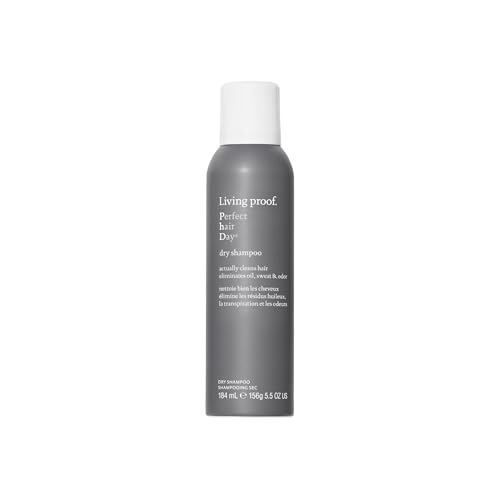
Living Proof Perfect Hair Day Dry Shampoo
 Check Price
Best Value
Batiste Dry Shampoo, Original Classic Clean (5.71 oz)
 Check Price
Best Non-Aerosol
Klorane Oat Milk Powder Dry Shampoo, Non-Aerosol (1.7 oz)
Written by HairGrowthReviews Editorial Team
Reviewed by Ernesta Malinauskytė, PhD, Director of Hair Research, TRI Princeton
Updated 2026-10-14 · Independently researched · How we review
We may earn a commission when you buy through our links, at no cost to you. As an Amazon Associate we earn from qualifying purchases. How we research
The Short Version
- No study has shown that dry shampoo causes pattern hair loss or shedding from the follicle.
- Overuse without washing leaves oil, powder and dead skin on the scalp, which can cause itching, flaking and irritation.
- Claims that dry shampoo clogs follicles or causes folliculitis are largely speculative; the evidence is weak and mostly anecdotal.
- Some aerosol dry shampoo lots were recalled in 2021 and 2022 over benzene from propellants; the issue was contamination, not hair loss.
- Use dry shampoo for a day or two between washes, wash thoroughly, and see a dermatologist about any unexplained shedding.
On This Page · 10 sections
Does dry shampoo cause hair loss? The question comes up constantly, usually from people who rely on it most days and have noticed more hair in their brush. Add social media posts warning that dry shampoo clogs follicles, and news of aerosol recalls, and it is easy to see why the product has picked up a bad reputation.
The evidence does not support the idea that dry shampoo causes hair loss. It is mostly absorbent powder that sits on the hair and the surface of the scalp, and it does not act on the follicle where hair loss happens. There are no studies showing that it triggers pattern hair loss or shedding.
There are still things worth knowing. Using dry shampoo instead of washing for days at a time can leave buildup that irritates the scalp, and some aerosol cans were recalled because of benzene contamination. This guide separates what is known from what is speculation and gives you a simple wash schedule. If you are choosing a product, our guide to the best dry shampoo compares aerosols, powders and tinted formulas.
What Dry Shampoo Actually Does on Your Scalp
Dry shampoo is mostly absorbent powder. Starches such as rice or corn starch, clays and similar ingredients soak up the oil your scalp produces, so roots look less greasy and hair feels lighter. Aerosols deliver the powder with a propellant and usually some alcohol to help it dry fast. Powders skip the propellant and rely on you to distribute them.
The effect is cosmetic and temporary. The oil is still on your scalp, now mixed with powder, along with sweat, dead skin cells and any styling products you used. Nothing is rinsed away. That is why dry shampoo is best thought of as a time-buyer: it gets you through a day or two looking fresh until you can wash properly.
dry shampoo is best thought of as a time-buyer
Used that way, it has real benefits. Washing and heat-styling less often means less friction and less heat damage, which is good for fine and fragile hair. It extends a blowout, so you use hot tools less, and the grip it adds at the roots gives flat hair volume that is hard to get any other way.
None of this involves the follicle. Dry shampoo does not contain ingredients designed to penetrate the skin or change how hair grows, and it does not affect the hormones or genetics behind pattern hair loss. Its effects, good and bad, happen on the surface.
What the Evidence Says About Dry Shampoo and Hair Loss
There is no good evidence that dry shampoo causes hair loss. No clinical study has shown that it triggers androgenetic alopecia, the genetic and hormonal pattern loss behind most thinning in men and women, or telogen effluvium, the sudden shedding that follows illness, stress, childbirth or other shocks. Both have well-understood causes, and spraying starch on your roots is not one of them.
Much of the concern online comes from a reasonable-sounding idea: that powder left on the scalp could block follicles, trap oil and inflame the skin around each hair, eventually affecting growth. It is a plausible theory, and some dermatologists mention it as a reason not to overuse dry shampoo, but it is based on clinical reasoning and individual experience rather than studies. It should be treated as a possibility to be cautious about, not an established fact.
It should be treated as a possibility to be cautious about, not an established fact.
It is also worth remembering that losing some hair every day is normal. Commonly cited figures put normal shedding at somewhere around 50 to 100 hairs a day, and those hairs are more noticeable when you brush out a day-old style with dry shampoo in it. Seeing hair in your brush is not, on its own, a sign that anything is wrong.
If your shedding has clearly increased, or you see a widening part, a thinning crown or patches of loss, the cause almost certainly lies elsewhere: pattern hair loss, low iron, thyroid problems, recent illness or stress, among others. Those are worth investigating with a doctor rather than blaming your dry shampoo.
Overuse, Buildup and Scalp Irritation
Where dry shampoo genuinely causes problems is overuse. Several days of layering powder on an unwashed scalp leaves buildup you can see and feel: a gritty, coated scalp, dull roots and sometimes a white cast that will not brush out. Many people find their scalp becomes itchy and flaky when they push dry shampoo too far.
Scalp conditions can flare too. Seborrheic dermatitis, which causes greasy scaling and redness, is linked to a yeast called Malassezia that feeds on scalp oil. Leaving oil in place for days, under a layer of powder, gives that yeast more to work with. If you are prone to dandruff, heavy dry shampoo use can make it worse and makes flakes more visible.
Where dry shampoo genuinely causes problems is overuse.
Some people also report small bumps or tenderness around hair follicles after heavy use, which can look like folliculitis. Whether dry shampoo itself is a meaningful cause is not well established, and folliculitis has many other triggers. But an irritated, inflamed scalp is not a good environment for hair, and scratching it can break fragile hairs.
Fragrance and alcohol are other common irritants, particularly in aerosols. If your scalp stings, itches or goes red after using a particular product, stop using it. A powder formula without fragrance, or simply washing more often, is usually enough to settle things down.
The Benzene Recalls: What Happened and What It Means
In December 2021, Procter & Gamble voluntarily recalled aerosol dry shampoo and dry conditioner sprays from brands including Pantene, Aussie and Herbal Essences after testing found benzene in some products. In October 2022, Unilever voluntarily recalled select lots of aerosol dry shampoo from Dove, Nexxus, Suave, TIGI (Rockaholic and Bed Head) and TRESemmé produced before October 2021.
Benzene was not an ingredient in these products. Unilever said its investigation traced the contamination to the aerosol propellant, the gas that pushes product out of the can. Benzene is classified as a human carcinogen, and long-term exposure at high levels is linked to blood cancers such as leukemia, which is why even contamination was taken seriously.
The recalls had nothing to do with hair loss
It is important to keep this in proportion. Unilever said its health evaluation found that daily exposure at the levels detected would not be expected to cause adverse health effects, and the recalls were limited to specific lots. The recalls had nothing to do with hair loss; benzene contamination is not known to cause hair to fall out.
Practically, check any older aerosol cans you own against the FDA's recall listings and the brand's recall page using the lot code printed on the can, and dispose of any that match. Spray in a ventilated room rather than a small closed bathroom. If you would rather avoid aerosols altogether, a non-aerosol powder sidesteps the propellant question entirely.
Our #1 pick for dry shampoo
Living Proof Perfect Hair Day Dry Shampoo
The nicest dry shampoo to live with. Worth the premium if residue and texture have put you off cheaper sprays.
A Sensible Wash Schedule If You Use Dry Shampoo
The simplest rule is to use dry shampoo for a day or two between washes, then wash properly. For most people that means washing at least every two to three days if they use dry shampoo regularly. How often you need to wash depends mainly on how oily your scalp gets and whether you have dandruff or a sensitive scalp.
When you do wash, wash thoroughly. Massage shampoo into the scalp with your fingertips rather than just washing the lengths, rinse well, and do a second lather if you have used dry shampoo for a couple of days. A gentle scalp scrub or clarifying shampoo every week or two can help if you use dry shampoo often.
Apply dry shampoo only where you need it, usually the part, crown and hairline, and from a distance of around eight to twelve inches with sprays. Give it a minute or two to absorb oil, then massage and brush out the excess. Less product on the scalp means less buildup to wash out later.
If you have dandruff or seborrheic dermatitis, lean toward washing more and using dry shampoo less. A medicated shampoo, such as one containing ketoconazole, used a couple of times a week will do far more for your scalp than any amount of dry shampoo, which can make flaking look worse.
| Dry Shampoo Use | Wash At Least | |
|---|---|---|
| Oily scalp | A day between washes | Every 1 to 2 days |
| Normal scalp | One or two days between washes | Every 2 to 3 days |
| Dry scalp or textured hair | Occasional root refresh | Per your usual routine |
| Dandruff or seborrheic dermatitis | Sparingly, if at all | Often, with a medicated shampoo |
| Using minoxidil | Morning, away from dose times | Before the evening dose if needed |
Aerosol, Powder or Tinted: Which Is Gentlest on Your Scalp?
Aerosol sprays are the most popular format because they are fast and spread powder evenly. The trade-offs are the propellant, a tendency to coat the whole head rather than just the oily areas, and the alcohol and fragrance many contain, which some scalps find drying or irritating. If you use an aerosol, short bursts from a distance on the oily areas only keep the amount on your scalp down.
Loose powders in puffer or shaker bottles give you more control. You can place product exactly at the part, hairline or crown, they avoid propellants entirely, and fragrance-free versions are easier to find. The catch is technique: too much powder, or too little blending, leaves a dusty look and more residue on the skin.
No format is clearly safer for your hair, because none of them affects the follicle.
Tinted formulas solve the white cast that standard powders leave on dark hair, and they come as both sprays and powders. They do not change the scalp risk much either way, but they can transfer onto pale fabrics and pillowcases, which is one more reason to wash them out regularly.
No format is clearly safer for your hair, because none of them affects the follicle. If your scalp is sensitive, a fragrance-free powder applied sparingly is usually the gentlest option. If you prefer a spray, choose one you can use lightly, ventilate the room, and keep washing on schedule.
Using Dry Shampoo When Your Hair Is Thinning
For people with fine or thinning hair, dry shampoo can be one of the most useful styling products available. Fine strands cling together and lie flat when they get oily, which makes the scalp more visible. Dry shampoo absorbs that oil and adds grip, so roots lift and hair separates. Living Proof Perfect Hair Day Dry Shampoo, our top pick, is low-residue enough for fine hair.
Use it lightly. A small amount at the part and crown, massaged in and brushed through, gives lift without dulling the hair. Heavy application has the opposite effect: thick powder makes fine hair look dry and sits visibly on the scalp. Powder formulas let you place product precisely where you need it.
dry shampoo is a styling tool, not a treatment
If you use minoxidil, apply it to a clean, dry scalp as directed and avoid caking dry shampoo onto the same area right before a dose, since a layer of powder can get in the way of the solution reaching the skin. Many people use dry shampoo in the morning and apply minoxidil at night after washing.
Above all, remember that dry shampoo is a styling tool, not a treatment. If your hair is genuinely thinning, an evidence-based treatment such as minoxidil will do far more for you. If your hair loss is sudden, patchy or comes with an itchy, scaly or painful scalp, see a dermatologist to find out what is behind it.
Frequently Asked Questions
Can dry shampoo clog hair follicles?
Heavy use without washing leaves powder, oil and dead skin on the scalp, and some dermatologists suggest this could contribute to irritation around follicles. There is no good evidence that it blocks follicles enough to cause hair loss. Washing within a day or two keeps buildup from accumulating.
Can dry shampoo cause folliculitis?
It is possible in theory, and some people report bumps after heavy use, but there is little evidence that dry shampoo is a meaningful cause of folliculitis. Folliculitis has many triggers. If you notice painful or pus-filled bumps, stop using the product, wash regularly and see a doctor if it does not clear.
Is it bad to use dry shampoo every day?
Using a little every day is fine if you are still washing regularly. The problem is using dry shampoo every day instead of washing, which leads to buildup, itching and flaking. Aim to use it for a day or two between washes and wash thoroughly when you do.
Which dry shampoos were recalled for benzene?
Procter & Gamble recalled some aerosol dry shampoos and dry conditioners, including Pantene, Aussie and Herbal Essences, in December 2021. Unilever recalled select aerosol lots from Dove, Nexxus, Suave, TIGI and TRESemmé made before October 2021, in October 2022. Check lot codes against the FDA's recall listings.
Is non-aerosol dry shampoo safer?
Non-aerosol powders avoid propellants, which is where the benzene contamination in the recalled cans came from, and they let you apply product more precisely. They are not more effective at absorbing oil. If you want to avoid aerosols, a powder is a simple choice; otherwise, ventilate when spraying.
Can dry shampoo cause dandruff?
Dry shampoo does not cause dandruff, but it can make it worse. Leaving oil on the scalp for days gives the yeast linked to dandruff more to feed on, and powder makes flakes more visible. If you have dandruff, wash more often and use a medicated shampoo instead.
Can I use dry shampoo if I use minoxidil?
Yes. Apply minoxidil to a clean, dry scalp and avoid spraying dry shampoo onto the same area just before a dose, because powder can get in the way. Many people use dry shampoo in the morning and minoxidil at night after washing.
The Bottom Line
Dry shampoo does not cause hair loss, and there is no good evidence that it harms the follicle. Overuse can irritate the scalp, and specific older aerosol lots were recalled for benzene contamination. Use it lightly for a day or two between washes, wash thoroughly, check old cans against recall lists, and look for the real cause of any unusual shedding with a doctor.