Our Picks at a Glance
- 1
 Check Price →
 - 2
 Check Price →
 - 3
 Check Price →
Best for Oily Scalp With Dandruff
Head & Shoulders Clinical Strength Advanced Oil Control Anti-Dandruff Shampoo, 1% Selenium Sulfide (13.5 fl oz) - 4
 Check Price →
Best for Oily Roots, Dry Ends
Kérastase Spécifique Bain Divalent Balancing Shampoo for Oily Scalp (8.5 fl oz) - 5
 Check Price →
Best for Fine, Flat Hair
Aveda Rosemary Mint Purifying Shampoo (8.5 fl oz) - 6
 Check Price →
Best Dermatologist-Brand Pick
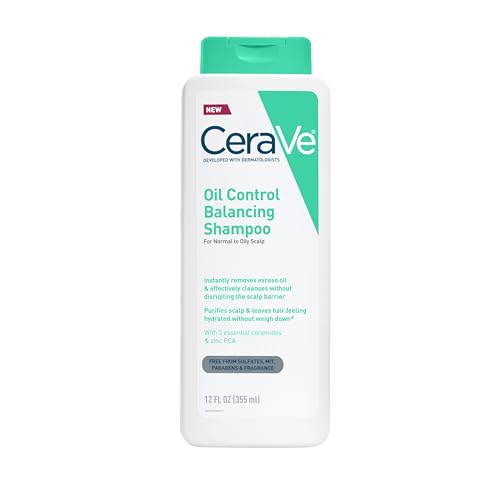
CeraVe Oil Control Clarifying Shampoo with Hyaluronic Acid (12 oz) - 7
 Check Price →
Best Weekly Deep Clean
Bumble and bumble Sunday Weekly Clarifying Shampoo (8.5 fl oz)
The Short Version
- Oil production is driven mainly by hormones and genetics. Washing more often does not cause a rebound in oil, so wash as often as your scalp needs.
- Paul Mitchell Tea Tree Special Shampoo is our best overall pick: a deep-cleaning, refreshing daily shampoo built for oily hair.
- L'Oréal Elvive Hyaluron + Pure is the best value, with salicylic acid for a clean scalp at a drugstore price.
- If oil comes with flakes and itch, a medicated shampoo such as Head & Shoulders Clinical Oil Control will do more than a regular cleanser.
- Condition only the mid-lengths and ends, and keep heavy oils and leave-ins away from the roots.
On This Page · 12 sections
The best shampoo for oily hair does one thing well: it removes the sebum your scalp produces efficiently enough that your roots stay fresh into the next day, without drying out the scalp or the lengths. That sounds simple, but oily hair is often paired with dry ends, fine strands that show oil quickly, or a flaky scalp, and each of those changes which shampoo works best. A formula that leaves straight, fine hair perfect can be far too harsh for someone whose roots are oily but whose ends are color-treated and fragile.
This guide is about the shampoo you use most days. It is not the same as our sister guides, and the distinction matters. A clarifying shampoo is a periodic reset for product and mineral buildup, covered in our best clarifying shampoo guide. Dry shampoo buys time between washes. And if your oily scalp also itches or flakes, the cause may be seborrheic dermatitis, which we cover in the best shampoo for itchy scalp and best ketoconazole shampoo guides. Here, the focus is everyday oil control.
We ranked the products below on how effectively they cleanse oil according to brand and listing information, how gentle they are for frequent washing, how well they suit fine hair and oily-root, dry-end combinations, value, and consistent patterns in verified buyer feedback. This is a research-based ranking, not hands-on testing, and every pick links to its exact Amazon listing.
Why Your Hair Gets Oily So Fast
The oil on your scalp is sebum, produced by sebaceous glands attached to every hair follicle. Sebum is not a problem in itself; it protects the skin barrier and gives hair shine. Oily hair is simply the visible result of a scalp producing more sebum than your hair can carry without looking flat, piecey or greasy.
How much sebum you make is mostly out of your hands. Androgens, the hormones that rise at puberty in both sexes, drive sebaceous gland activity, which is why oily hair often starts in the teen years and can fluctuate with the menstrual cycle, pregnancy and hormonal conditions such as polycystic ovary syndrome. Genetics, age and climate matter too, with heat and humidity generally making oiliness more noticeable.
Fine, straight hair looks greasy fastest
Hair type changes how quickly the oil shows. Fine, straight hair looks greasy fastest, because oil travels easily down a straight strand and fine hair has little bulk to hide it. Curly and coily hair often looks less oily at the roots for the same reason it tends to be dry at the ends: sebum does not travel down a spiral easily.
If your scalp has become much oilier quite suddenly, or oiliness arrives alongside acne, irregular periods, excess body hair or thinning on the crown, it is worth mentioning to a doctor. Those combinations can point to a hormonal cause that deserves its own assessment, and a shampoo will only manage the symptom.
How Often Should You Wash Oily Hair? The Rebound Myth
The most persistent piece of oily-hair advice is that washing too often strips the scalp and makes it produce more oil, so you should train your hair by washing less. There is no good evidence for that rebound effect. Sebum production is controlled by hormones and gland size, not by a feedback loop that senses how recently you shampooed.
What people experience when they stretch washes is that their scalp feels and looks greasier for longer, because the oil is simply accumulating. Some report that after a few weeks their hair seems less oily, which is more likely down to getting used to the feel, changing products, or styling to hide roots than to a real drop in sebum.
There is no good evidence for that rebound effect.
The practical answer is to wash as often as your scalp needs. For many people with oily hair that means daily or every other day, and that is fine. The things that do cause problems with frequent washing are harsh formulas, very hot water and skipping conditioner on the lengths, all of which are easy to fix without washing less.
There is also a scalp-health reason not to over-stretch washes if you are oily. Sebum, dead skin and product residue sitting on the scalp feed the yeast associated with dandruff and seborrheic dermatitis. People prone to flaking often find their scalp is calmer with more frequent washing, not less.
The 7 Best Shampoos for Oily Hair
The picks below are ranked on oil control, gentleness for frequent washing, fit for fine hair and dry ends, and value. Most are everyday shampoos; one is medicated for oily scalps that also flake, and one is a weekly deep clean.
Paul Mitchell Tea Tree Special Shampoo (10.14 fl oz)
Deep-Cleaning Daily Shampoo
Best for: Most people with an oily scalp who want a fresh, thoroughly clean feel every wash
- Labeled for
- All hair types, especially oily (per listing)
- Key extras
- Tea tree oil, peppermint
- Feel
- Tingling, cooling
- Sizes
- 10.14 oz up to liter
Paul Mitchell's Tea Tree Special Shampoo has been a salon staple for oily hair for decades, and its listing still describes it plainly: deep cleans, refreshes the scalp, for all hair types, especially oily hair. It lathers well, rinses clean, and leaves the scalp with a tingling, cooling sensation from tea tree and peppermint that many people with oily roots love. Buyer feedback consistently mentions hair feeling cleaner for longer.
The tea tree oil is mostly about the experience. There is modest evidence that a shampoo with 5% tea tree oil can help mild dandruff, but Paul Mitchell does not state its concentration, so treat the tingle as refreshing rather than therapeutic. The real benefit is a thorough, balanced cleanse that does not feel harsh, available in large sizes that bring down the cost per wash.
Skip it if you have a sensitive scalp or a known reaction to essential oils. Tea tree oil can cause allergic contact dermatitis, particularly as it oxidizes in an opened bottle, and the strong tingle is too much for some people. If you have flaking with your oil, a medicated shampoo will help more.
What We Liked
- Built specifically for oily hair and scalp
- Thorough, clean-rinsing lather that keeps roots fresh longer
- Refreshing tingle many oily-scalp users enjoy
- Large sizes keep the cost per wash reasonable
What We Didn't
- Tea tree and peppermint can irritate sensitive scalps
- Not a treatment for dandruff or seborrheic dermatitis
- Can feel drying on long, color-treated ends
The Bottom Line
The classic oily-hair shampoo for good reason: deeply cleansing, refreshing and easy to live with.
L'Oréal Paris Elvive Hyaluron + Pure Purifying Shampoo for Oily Hair (28 fl oz)
Purifying Drugstore Shampoo
Best for: Budget-conscious buyers with oily roots and normal-to-dry lengths
- Key actives
- Salicylic acid, hyaluronic acid (per listing)
- Labeled for
- Oily hair (per listing)
- Size
- 28 fl oz
- Type
- Clarifying daily shampoo
L'Oréal's Elvive Hyaluron + Pure is a drugstore shampoo built specifically for oily hair, and it covers the main need well. The listing describes a purifying, clarifying shampoo with salicylic acid and hyaluronic acid. Salicylic acid is a mild exfoliant that helps loosen oil and dead skin on the scalp, while the hyaluronic acid is there to keep lengths from feeling stripped, the classic problem with cheap oil-control shampoos.
The large 28-ounce bottle makes it the best value on this list by a wide margin, which matters for oily hair because you are likely washing daily. Buyer feedback describes roots that stay fresher for longer and lengths that still feel soft, which is exactly the balance you want for oily roots and drier ends.
Skip it if you have a very sensitive scalp, since this is a scented mass-market formula. Salicylic acid can also feel drying on a scalp that is already irritated. For oil plus visible flakes, a medicated shampoo with an antifungal ingredient is the better tool.
What We Liked
- Large bottle at a low price per ounce
- Salicylic acid helps clear oil and scalp residue
- Designed to keep lengths from feeling stripped
- Easy to find at drugstores
What We Didn't
- Scented formula may bother sensitive scalps
- Not a dandruff treatment
- Hydration claims are cosmetic
The Bottom Line
The best everyday oily-hair shampoo for the money, especially if your ends run dry.
Head & Shoulders Clinical Strength Advanced Oil Control Anti-Dandruff Shampoo, 1% Selenium Sulfide (13.5 fl oz)
Medicated Anti-Dandruff Shampoo
Best for: Oily scalps that also flake, itch or show signs of seborrheic dermatitis
- Active
- 1% selenium sulfide
- Labeled for
- Stubborn dandruff, oil control
- Size
- 13.5 fl oz
- Status
- OTC anti-dandruff drug
An oily scalp and dandruff often travel together, because the yeast behind dandruff, Malassezia, feeds on scalp oils. Head & Shoulders Clinical Strength Advanced Oil Control combines that link into one bottle: a medicated shampoo with 1% selenium sulfide, an established over-the-counter anti-dandruff active, in a formula pitched at oily scalps and stubborn dandruff.
Selenium sulfide slows yeast growth and the rapid skin turnover that produces flakes. For someone whose roots go greasy and whose scalp also itches and sheds flakes, it can solve both problems at once, which no regular oil-control shampoo will. Use it as directed on the label, typically a few times a week, and a gentler shampoo on other days if needed.
Skip it if you do not have flakes; a medicated shampoo is not necessary for oil alone. Selenium sulfide product labels warn it may discolor bleached, tinted, gray or permed hair, so rinse thoroughly and be cautious with light or color-treated hair. For deeper detail on dandruff options, see our ketoconazole shampoo guide.
What We Liked
- Treats oily scalp and dandruff in one product
- 1% selenium sulfide is an established anti-dandruff active
- Clinical Strength formula aimed at stubborn flaking
What We Didn't
- Unnecessary if you have oil but no flakes
- May discolor light, bleached or color-treated hair
- Medicated scent and feel are not for everyone
The Bottom Line
The right pick when oil comes with flakes and itch. Otherwise, use a regular oil-control shampoo.
Kérastase Spécifique Bain Divalent Balancing Shampoo for Oily Scalp (8.5 fl oz)
Balancing Salon Shampoo
Best for: People whose scalp gets oily fast but whose lengths are dry, long or color-treated
- Labeled for
- Oily scalp and hair (per listing)
- Claim
- Cleanses roots, hydrates ends
- Size
- 8.5 fl oz
- Price tier
- Luxury
Kérastase's Spécifique Bain Divalent is built for the most common oily-hair complaint we see in buyer feedback: roots that look greasy by lunchtime while the ends feel dry and rough. The listing describes a balancing shampoo that cleanses oil from the roots and hydrates dry ends, which is exactly the combination people with long, colored or heat-styled hair need.
Buyers describe a light, clean finish at the scalp without the squeaky feel of harsher oil-control shampoos, and lengths that stay softer than with a basic purifying formula. It is a good fit if you have tried strong oil-control shampoos and found they fixed your roots but wrecked your ends.
The price is the drawback. It costs several times as much per ounce as the L'Oréal pick, and for people with short hair or no dryness at the ends, that premium buys little. Skip it if your whole head is oily and your hair is short; a straightforward deep-cleaning shampoo will do the same job for less.
What We Liked
- Designed for the oily-root, dry-end combination
- Clean scalp finish without stripping lengths
- Good option for long or color-treated hair
What We Didn't
- Expensive per ounce
- Little advantage for short hair or uniformly oily hair
- Smaller bottle than drugstore options
The Bottom Line
The best choice for oily roots with dry or processed ends, if the luxury price fits your budget.
Aveda Rosemary Mint Purifying Shampoo (8.5 fl oz)
Purifying Shampoo
Best for: Fine to medium hair that goes flat and oily quickly
- Labeled for
- Normal to oily, fine to medium hair (per listing)
- Claim
- Removes buildup, adds shine
- Size
- 8.5 fl oz
- Scent
- Rosemary and mint
Fine hair shows oil faster than any other hair type, because there are more strands per square inch and each one is thin enough to look limp and separated with very little sebum. Aveda's Rosemary Mint Purifying Shampoo is pitched squarely at that problem: the listing describes a clarifying shampoo that gently removes buildup and adds shine, made for normal to oily, fine to medium hair.
It gives a light, clean finish that buyers say helps fine hair keep volume, and the rosemary-mint scent is a big part of its appeal. Pair it with a light conditioner on the ends only, and fine hair often holds its lift noticeably longer than with a heavier, moisturizing shampoo.
Skip it if your scalp is sensitive to plant extracts or fragrance, which this formula leans on. Despite rosemary's popularity in hair-growth content, a rinse-off shampoo is not a hair loss treatment; see our rosemary oil guide for what the evidence actually shows. Thick or coarse hair may also find it too light.
What We Liked
- Made for fine, oily hair that goes flat quickly
- Clean, light finish helps preserve volume
- Pleasant, refreshing rosemary-mint scent
What We Didn't
- Plant extracts and fragrance can irritate sensitive scalps
- Not a hair growth treatment despite the rosemary
- Pricier than drugstore alternatives
The Bottom Line
A strong pick for fine hair that goes greasy and flat. Not for sensitive scalps.
CeraVe Oil Control Clarifying Shampoo with Hyaluronic Acid (12 oz)
Oil Control Shampoo
Best for: Oily scalps that also feel tight or easily irritated by heavily scented shampoos
- Labeled for
- Oil control, clarifying (per listing)
- Key extras
- Hyaluronic acid
- Size
- 12 oz
- Brand style
- Skin-barrier focused
CeraVe is best known for its barrier-focused skin care, and its newer hair line brings the same approach to the scalp. The Oil Control Shampoo is described in its listing as a clarifying shampoo with hyaluronic acid, designed to cleanse an oily scalp while keeping it comfortable. For people who find classic oil-control shampoos leave the scalp tight or itchy, that skin-care-first positioning is the appeal.
It sits at a drugstore price and suits people who think of their scalp as skin, which it is. Buyer feedback on the line tends to mention a gentle, unfussy wash rather than a dramatic tingle, which some will see as a plus and others as underwhelming compared with Paul Mitchell's minty clean.
Skip it if you want a strong sensory clean or heavy-duty buildup removal; it is a balanced daily shampoo rather than a deep detox. Because the line is relatively new, it has less of a long-term track record than other picks here. Check the label if you need a fragrance-free formula.
What We Liked
- Scalp-as-skin approach from a barrier-focused brand
- Drugstore price
- Gentle daily cleanse for oily scalps
What We Didn't
- Less of a track record than long-established picks
- Milder feel may not satisfy very oily scalps
- Not a dandruff treatment
The Bottom Line
A sensible, gentle oil-control shampoo for people whose scalp dislikes strong formulas.
Bumble and bumble Sunday Weekly Clarifying Shampoo (8.5 fl oz)
Weekly Clarifying Shampoo
Best for: Oily hair weighed down by styling products, dry shampoo and pollution
- Use
- Once a week (per brand)
- Claim
- Removes residue, excess oil, pollutants
- Labeled for
- Curly, wavy and straight hair
- Size
- 8.5 fl oz
Bumble and bumble's Sunday Shampoo is designed as a once-a-week deep clean rather than a daily wash, and that makes it a useful partner for an oily-hair routine. The listing describes a weekly clarifying shampoo that gently but deeply cleanses residue, excess oil and pollutants, for curly, wavy and straight hair.
Oily hair often attracts heavy dry shampoo use, and dry shampoo powder plus styling products and sebum can build into a coating that a gentle daily shampoo never fully removes. One wash a week with Sunday resets the scalp and roots so your regular shampoo works better the rest of the week. Buyer feedback highlights the noticeably lighter, fresher feel afterward.
Skip it as a daily shampoo; using a clarifier every day is more likely to dry the scalp and fade color. If you only need occasional clarifying, our best clarifying shampoo guide includes cheaper options. It is also a premium price for a weekly-use product.
What We Liked
- Strong weekly reset for dry shampoo and styling buildup
- Helps your daily shampoo work better the rest of the week
- Suits all hair textures, according to the brand
What We Didn't
- Not meant for daily use
- Premium price for a once-a-week product
- Can fade color if overused
The Bottom Line
A once-a-week reset that makes an oily-hair routine work better. Pair it with a daily shampoo.
Ingredients That Help an Oily Scalp (and Ones That Don't)
The core of any oil-control shampoo is its cleansing system. Conventional surfactants such as sodium laureth sulfate remove sebum very efficiently, which is why many effective oily-hair shampoos still use them. Gentle sulfate-free cleansers are designed to leave more oil behind, which is great for dry and curly hair but often the wrong choice for an oily scalp.
Salicylic acid is a useful supporting ingredient. It is a beta hydroxy acid that loosens dead skin cells and dissolves into oil, helping keep the scalp surface clear. Many purifying shampoos and some medicated shampoos use it. Clays and charcoal are also common in oil-control products; they can absorb some oil, though their effect in a rinse-off shampoo is modest.
Cooling and botanical ingredients like tea tree oil, peppermint, menthol and rosemary give a fresh, tingly feel
Cooling and botanical ingredients like tea tree oil, peppermint, menthol and rosemary give a fresh, tingly feel that many oily-scalp users enjoy, but they are mostly sensory. They are also among the more common causes of scalp irritation, so they are worth avoiding if your scalp is sensitive.
What to avoid at the roots: rich oils, butters, heavy silicones and moisturizing shampoos designed for dry or curly hair. These leave a conditioning film that adds to the greasy look. That does not mean you must avoid every conditioning ingredient, only that they belong on the lengths, not on the scalp.
| What it does | Helpful for oily hair? | |
|---|---|---|
| Conventional surfactants (e.g. SLES) | Remove sebum efficiently | Yes |
| Salicylic acid | Loosens dead skin, dissolves into oil | Yes |
| Clay or charcoal | Absorbs some oil | Modest |
| Tea tree, peppermint, menthol | Cooling, refreshing feel | Sensory; may irritate |
| Rich oils, butters, heavy silicones | Condition and coat hair | Not at the roots |
Oily Scalp or Seborrheic Dermatitis? When Oil Comes With Flakes
Oiliness alone is a cosmetic issue. Oil plus greasy yellowish flakes, redness and itching is often seborrheic dermatitis, a common inflammatory condition linked to Malassezia, a yeast that lives on everyone's skin and thrives on sebum. It tends to flare in oily areas such as the scalp, eyebrows, sides of the nose and behind the ears, and it often worsens with stress, cold weather and infrequent washing.
A regular oil-control shampoo will not resolve it. Seborrheic dermatitis responds to medicated shampoos with antifungal or anti-flaking ingredients: ketoconazole, selenium sulfide, pyrithione zinc, or salicylic acid for scale. That is why we include Head & Shoulders Clinical Oil Control on this list, and why our best ketoconazole shampoo guide goes into the medicated options in depth.
A regular oil-control shampoo will not resolve it.
Medicated tar shampoos, such as coal tar formulas, are a different category again. They are used for psoriasis, seborrheic dermatitis and stubborn dandruff, not for routine oil control, and they come with drawbacks like odor, staining of light hair and increased sun sensitivity. Do not reach for one just because your hair gets greasy.
A simple approach works for most people with oily, flaky scalps: a medicated shampoo two or three times a week, left on for a few minutes before rinsing, and a regular oil-control shampoo on other days. If flaking persists after a month of consistent treatment, or you have thick, well-defined plaques, see a dermatologist.
Oily Roots, Dry Ends: Conditioning Without the Grease
Many people with oily hair skip conditioner entirely, worried it will make things worse. For short hair that can work, but for anything past the chin it usually backfires. The lengths of your hair are older, more weathered and often heat-styled or colored, and without conditioner they tangle, break and look frizzy, even as the roots look greasy.
The fix is placement. Shampoo the scalp only, letting the rinse run through the lengths. Apply conditioner from roughly the ears down, or from mid-length on longer hair, and keep it off the scalp. Choose a lightweight conditioner rather than a rich mask, and rinse it thoroughly.
The fix is placement.
Some people with oily roots and dry ends use a two-shampoo approach: an oil-control shampoo at the roots and a gentler one on the ends, or a purifying shampoo for most washes with a moisturizing wash once a week. Balancing shampoos like Kérastase Spécifique Bain Divalent are designed to do both in one bottle.
Watch leave-ins and oils too. A drop of hair oil on the ends is fine; working it up toward the scalp is a fast route to greasy roots. If you use a leave-in conditioner or heat protectant, apply it from the mid-lengths down and use the smallest amount that does the job.
Habits That Make Oily Hair Worse (and Better)
Touching and brushing your hair constantly moves oil from the scalp down the strands and transfers oil from your hands. Over-brushing with a boar bristle brush, which is designed to distribute sebum, can make roots look flatter and lengths greasier. Brush enough to detangle and style, then leave it alone.
Pillowcases, hats, helmets and headbands all collect oil and product and press it back onto your hair. Washing pillowcases often, and changing them more frequently in hot weather, is a simple habit that helps. Hats and helmets trap heat and sweat, so a quick wash after a workout or a long day under a helmet is reasonable.
Dry shampoo is a useful bridge between washes
Dry shampoo is a useful bridge between washes, absorbing oil with starches or powders so roots look fresher. It is not a substitute for washing, though. Powder, oil and dead skin left on the scalp for days can build up, and heavy dry shampoo users benefit from a weekly clarifying wash. Our best dry shampoo guide covers the options.
Diet gets a lot of attention, but the evidence linking specific foods to scalp oiliness is thin. A balanced diet is good for your hair overall, yet there is no reliable food fix for an oily scalp. Consistent washing with the right shampoo, sensible conditioner placement and less touching will make a bigger difference.
Compared Side by Side
| Product | Type | Strength | Hair Type | Best For |
|---|---|---|---|---|
| Paul Mitchell Tea Tree Special | Daily | Deep clean | All, especially oily | Best overall |
| L'Oréal Elvive Hyaluron + Pure | Daily | Purifying | Oily roots, dry lengths | Best value |
| Head & Shoulders Clinical Oil Control | Medicated | Strong | Oily, flaky scalp | Oil plus dandruff |
| Kérastase Bain Divalent | Daily | Balancing | Oily roots, dry ends | Long or colored hair |
| Aveda Rosemary Mint | Daily | Purifying | Fine to medium | Fine, flat hair |
| CeraVe Oil Control | Daily | Gentle | Oily, easily irritated | Barrier-focused care |
| Bumble and bumble Sunday | Weekly | Deep clean | All textures | Weekly reset |
Ready to Buy? Our Picks Again
- 1Check Price →
- 2Check Price →
- 3Check Price →
Best for Oily Scalp With Dandruff
Head & Shoulders Clinical Strength Advanced Oil Control Anti-Dandruff Shampoo, 1% Selenium Sulfide (13.5 fl oz) - 4Check Price →
Best for Oily Roots, Dry Ends
Kérastase Spécifique Bain Divalent Balancing Shampoo for Oily Scalp (8.5 fl oz) - 5Check Price →
Best for Fine, Flat Hair
Aveda Rosemary Mint Purifying Shampoo (8.5 fl oz) - 6Check Price →
Best Dermatologist-Brand Pick
CeraVe Oil Control Clarifying Shampoo with Hyaluronic Acid (12 oz) - 7Check Price →
Best Weekly Deep Clean
Bumble and bumble Sunday Weekly Clarifying Shampoo (8.5 fl oz)
Common Mistakes to Avoid
Washing Less to Train Your Scalp
There is no good evidence that skipping washes makes your scalp produce less oil over time. It mostly means walking around with greasier hair and, for flake-prone people, a scalp that feeds more yeast. Wash as often as your scalp needs, using a balanced oil-control shampoo and lukewarm water.
Using a Rich, Moisturizing Shampoo
Shampoos designed for dry or curly hair deliberately leave oils, butters and conditioning agents behind. On an oily scalp that film adds to the greasy look within hours. Choose a purifying or balancing formula for the roots, and save moisturizing products for the ends.
Skipping Conditioner Entirely
Avoiding conditioner can leave long hair tangled, brittle and frizzy, especially if it is colored or heat-styled. The problem is not conditioner, it is where you put it. Apply a lightweight formula from mid-length down, keep it off the scalp, and rinse thoroughly.
Treating Flaky Oiliness With Stronger Shampoo
If your oily scalp also flakes, itches or turns red, scrubbing harder with a stronger detergent will not fix it. That pattern often points to seborrheic dermatitis, which responds to medicated actives such as ketoconazole, selenium sulfide or pyrithione zinc. Rotate one in two or three times a week.
Relying on Dry Shampoo for Days
Dry shampoo absorbs oil but does not remove it. Several days of powder, sebum and dead skin can build up on the scalp, leave hair dull and contribute to itch. Use it as a bridge between washes, not a replacement, and add a weekly clarifying wash if you use it heavily.
Frequently Asked Questions
What is the best shampoo for oily hair?
For most people, Paul Mitchell Tea Tree Special Shampoo is the best shampoo for oily hair: a deep-cleaning, refreshing daily formula made for oily scalps. L'Oréal Elvive Hyaluron + Pure is the best value, and Head & Shoulders Clinical Oil Control is the better choice if your oily scalp also flakes or itches.
Does washing your hair every day make it oilier?
No. There is no good evidence that frequent washing triggers a rebound in oil production. Sebum output is controlled mainly by hormones and genetics. If your scalp feels dry or tight from daily washing, switch to a gentler formula and lukewarm water rather than washing less.
Is sulfate-free shampoo good for oily hair?
Often not. Sulfate-free shampoos use milder cleansers that remove less oil, which suits dry and curly hair but can leave an oily scalp feeling greasy sooner. If you prefer sulfate-free for color-treated lengths, use a lighter formula, focus it on the scalp, and add a weekly clarifying wash.
Why is my scalp oily but my ends dry?
Sebum is produced at the scalp and travels slowly down the hair, while the ends are the oldest, most weathered part of each strand. Heat styling, coloring and sun dry them further. Shampoo the scalp with an oil-control formula and condition only the mid-lengths and ends.
Can oily hair cause hair loss?
An oily scalp does not cause pattern hair loss, but the two can appear together, because androgens drive both oil production and androgenetic alopecia in susceptible people. Untreated seborrheic dermatitis can also worsen shedding. If you notice thinning alongside oiliness, look at proven treatments and consider seeing a dermatologist.
Is tea tree shampoo good for oily hair?
Tea tree shampoos are popular for oily hair mainly because they cleanse thoroughly and feel refreshing. A small study found a 5% tea tree oil shampoo helped mild dandruff, but most brands do not state their concentration. Tea tree oil can also cause allergic reactions, so skip it if your scalp is sensitive.
Should I use clarifying shampoo for oily hair?
Occasionally, yes. A clarifying shampoo once a week or every few weeks removes buildup from dry shampoo, styling products and sebum that a daily shampoo can miss. Using a strong clarifier every day is more likely to dry the scalp and fade color, so keep it as a periodic reset.
The Bottom Line
Oily hair is mostly genetics and hormones, so the goal is efficient daily cleansing, not washing less. Paul Mitchell Tea Tree Special is the best all-round shampoo for oily hair, and L'Oréal Elvive Hyaluron + Pure is the best value. Choose Head & Shoulders Clinical if you also have flakes, Kérastase for oily roots with dry ends, and Aveda for fine hair.
More Buyer's Guides
Hair Care
Best Dry Shampoo
Dry shampoo is a brilliant way to stretch a blowout and add lift to fine roots. It is also easy to overuse. Here are the formulas worth buying, what the aerosol recalls actually covered, and how to use dry shampoo without neglecting your scalp.
Hair Care
Best Clarifying Shampoo
A clarifying shampoo is a reset button for hair weighed down by product, oil, minerals or pool water. Used every week or few weeks, it makes hair lighter and your other products work better. Used too often, it dries hair and fades color.
Hair Care
Best Shampoo for Itchy Scalp
Most itchy scalps come down to one of four things: dandruff and seborrheic dermatitis, a reaction to a product, psoriasis, or plain dryness. Each responds to a different shampoo, and using the wrong one can make the itch worse.
Hair Growth & Hair Loss
Best Ketoconazole Shampoo
Ketoconazole is a proven dandruff fighter with a small but intriguing body of evidence for hair loss. Over the counter, one brand dominates, so the smarter questions are which size to buy, how to use it, and what to rotate it with.
Hair Care
Best Scalp Scrub
A good scalp scrub clears product buildup, excess oil and dead skin that shampoo leaves behind. It will not regrow hair, and the wrong one can irritate. These are the physical and chemical scalp exfoliants worth using, and who should skip them.
Men's Grooming
Best Shampoo for Men
Men's shampoos are mostly marketed on fragrance and packaging, but what actually matters is whether a formula suits an oily, dry or flaky scalp and how often you wash. These are the everyday shampoos that get it right.