The Short Answer
It may help a little. Ketoconazole shampoo is an antifungal approved for dandruff, not hair loss, but small studies, mostly of the 2% prescription strength, suggest it can modestly improve hair density in pattern hair loss, likely by calming scalp inflammation. It works best as an add-on to minoxidil or finasteride, used two or three times a week with several minutes of contact time.
Top Picks: Best Ketoconazole Shampoo
 Check Price
Best Overall
Nizoral Anti-Dandruff Shampoo with 1% Ketoconazole, Fresh Scent (7 fl oz)
 Check Price
Best Value
Nizoral Anti-Dandruff Shampoo with 1% Ketoconazole, Peppermint Scent (14 oz)
 Check Price
Best Rotation Partner
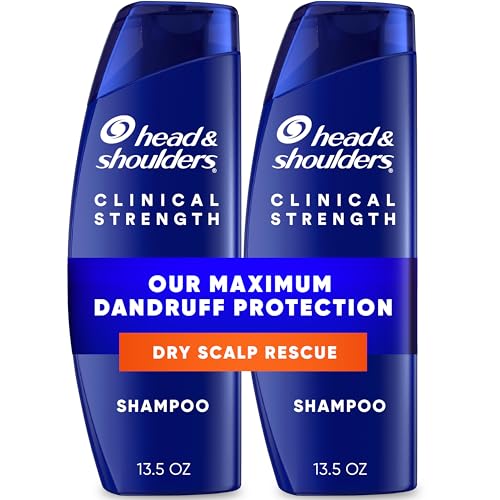
Head & Shoulders Clinical Strength Dry Scalp Rescue Shampoo, 1% Selenium Sulfide (Twin Pack)
Written by HairGrowthReviews Editorial Team
Reviewed by Ernesta Malinauskytė, PhD, Director of Hair Research, TRI Princeton
Updated 2026-10-24 · Independently researched · How we review
We may earn a commission when you buy through our links, at no cost to you. As an Amazon Associate we earn from qualifying purchases. How we research
The Short Version
- Ketoconazole is an antifungal approved for dandruff and seborrheic dermatitis; it is not approved to treat hair loss.
- Its possible hair benefit is thought to come from calming scalp inflammation, with a proposed but unproven local anti-androgen effect.
- The supporting studies are small and mostly used 2% ketoconazole, which is prescription-only in the United States; over-the-counter Nizoral is 1%.
- Use it two or three times a week and leave the lather on for several minutes; daily use mostly adds dryness.
- It makes most sense for people with both pattern thinning and dandruff, as an add-on to minoxidil or finasteride rather than a standalone treatment.
On This Page · 11 sections
Does ketoconazole shampoo help hair loss? It is one of the most frequently recommended extras in hair loss communities, often mentioned in the same breath as minoxidil and finasteride. The reality is more modest than the reputation. Ketoconazole is a well-proven treatment for dandruff, and there is a small body of research suggesting it may also help thinning hair a little. It is not a regrowth treatment in its own right, and it has never been tested in the large trials that support the drugs it is usually paired with.
That still leaves it a useful tool for the right person. Ketoconazole shampoo is inexpensive, widely available and low-risk when used as directed. Many people with thinning hair also have an itchy, flaky or inflamed scalp, and for them ketoconazole treats a real problem while possibly offering a small bonus for hair density. For someone with a calm, healthy scalp, the expected benefit is smaller and less certain.
This page explains how ketoconazole works, the two main theories for why it might help hair, what the studies actually found, whether the 1% or 2% strength matters, how to use it, and who is most likely to benefit. If you have already decided to try it, our guide to the best ketoconazole shampoo compares the Nizoral sizes and the medicated shampoos that make good rotation partners.
What Ketoconazole Is and What It Is Approved For
Ketoconazole is an azole antifungal. It works by interfering with the production of ergosterol, a building block of fungal cell membranes, which weakens and slows the growth of yeast and other fungi. In shampoo form, its target is Malassezia, a yeast that lives on almost everyone's scalp and feeds on the oils it produces.
Most people tolerate Malassezia without any trouble. In some, the yeast and the irritating by-products it makes from scalp oil trigger an inflammatory reaction, which shows up as dandruff or its more intense form, seborrheic dermatitis: flaking, itching, redness and sometimes greasy scale. Reducing the yeast reduces that reaction, which is why ketoconazole shampoo reliably improves dandruff. That is the use it is approved for, and the evidence for it is strong.
Reducing the yeast reduces that reaction, which is why ketoconazole shampoo reliably improves dandruff.
Hair loss is a different matter. No ketoconazole shampoo is approved to treat any form of hair loss, and the claim that it helps thinning hair rests on a much smaller and weaker evidence base. That does not mean the claim is wrong, but it does mean the benefit, if any, is likely to be modest and has not been measured with much precision.
It is also worth separating the shampoo from the tablet. Oral ketoconazole is a different product that carries serious warnings about liver injury and drug interactions, and it is no longer a first-line antifungal for that reason. It has no role in treating hair loss. The shampoo is rinsed off after a few minutes, very little is absorbed through the scalp, and it does not carry those risks.
The Antifungal Route: Calming Scalp Inflammation
The most widely accepted explanation for ketoconazole's possible hair benefit is indirect. Pattern hair loss, or androgenetic alopecia, is driven mainly by genetics and DHT, the hormone that gradually shrinks sensitive follicles. But biopsy studies of affected scalps often show low-grade inflammation around the upper part of the follicle, and many researchers think this inflammation may contribute to, or speed up, the miniaturization process.
Malassezia is one plausible source of that inflammation. If reducing the yeast calms the scalp, it may remove one factor that is quietly working against the follicles. On this view, ketoconazole is not regrowing hair directly so much as improving the environment the follicles are growing in, which would explain why its effect in studies appears real but small.
ketoconazole is not regrowing hair directly so much as improving the environment the follicles are growing in
This is also why the benefit is likely to vary between people. Someone with obvious dandruff or seborrheic dermatitis has more inflammation to treat, so there is more room for improvement. Someone with a clear, calm scalp may have little Malassezia-driven inflammation in the first place, and ketoconazole may have less to offer them. The research has not been designed to answer this question directly, so it remains a reasonable inference rather than an established fact.
There is a related practical point. An itchy, inflamed scalp leads to scratching, which can break hairs, and it makes treatments such as minoxidil less comfortable to apply every day. Whatever ketoconazole does at the level of the follicle, keeping the scalp calm makes the treatments with stronger evidence easier to stick with, and consistency is what drives their results.
The Proposed Local Anti-Androgen Effect
The second theory is more ambitious. At high oral doses, ketoconazole is known to interfere with the body's production of steroid hormones, including testosterone, which is why the tablet has occasionally been used in specialist settings to lower hormone levels. That observation led to the idea that ketoconazole applied to the scalp might also dampen androgen activity locally, in the skin around the follicles.
Some laboratory and animal research has been interpreted as supporting this, and you will often see ketoconazole described online as a topical DHT blocker. That description goes well beyond the evidence. It has not been shown that ketoconazole shampoo, used for a few minutes a few times a week, meaningfully lowers DHT in the human scalp, and its effect on blood hormone levels at shampoo strength appears negligible.
the anti-androgen idea is plausible but unproven
It is also worth keeping the scale in mind. Finasteride is a drug designed to block the enzyme that makes DHT, taken every day, and it lowers DHT substantially throughout the body. A shampoo that sits on the scalp for a few minutes and is then rinsed away is a very different proposition. Even if a local anti-androgen effect exists, it is unlikely to be anywhere near as strong.
The fair conclusion is that the anti-androgen idea is plausible but unproven. It may contribute to whatever benefit ketoconazole provides, alongside its anti-inflammatory action, but it should not be treated as a reason to use ketoconazole instead of finasteride, or as evidence that the two work in the same way.
What the Hair Loss Studies Actually Show
The human evidence for ketoconazole and hair is small in volume and mostly older. The study cited most often is a small comparative trial in men with androgenetic alopecia that tested 2% ketoconazole shampoo against an unmedicated shampoo, with a comparison to topical minoxidil. It reported that ketoconazole improved hair density and the proportion of hairs in the growing phase, and that its effect was broadly in the same range as the minoxidil comparison.
That finding is the main source of ketoconazole's reputation, and it is easy to see why it caught attention. But it needs careful reading. The study was small, the minoxidil used was a lower strength than many people use today, and a single modest trial cannot establish that a shampoo matches a drug with a much larger evidence base. It has not been confirmed by large, independent, placebo-controlled trials.
a single modest trial cannot establish that a shampoo matches a drug with a much larger evidence base
Other studies have looked at ketoconazole in combination with treatments such as minoxidil or finasteride, and some have reported that adding it improved results compared with the main treatment alone. These trials also tend to be small, short or limited in design, and they used different products, strengths and outcome measures, which makes them hard to compare or pool. Reviews of the topical options for pattern hair loss generally describe ketoconazole as promising but supported by low-quality evidence.
Evidence in women is thinner still. Ketoconazole is sometimes used as an add-on for female pattern hair loss, especially when dandruff or seborrheic dermatitis is present, but there is little dedicated trial data. Put together, the research supports a cautious statement: ketoconazole shampoo may modestly improve hair density in some people with pattern hair loss, but the size of the benefit is uncertain and it is clearly not a replacement for proven treatments.
Our #1 pick for ketoconazole shampoo
Nizoral Anti-Dandruff Shampoo with 1% Ketoconazole, Fresh Scent (7 fl oz)
The ketoconazole shampoo to start with. Proven for dandruff and a sensible add-on to a hair loss routine.
1% vs 2%: Does the Strength Matter for Hair?
In the United States, ketoconazole shampoo comes in two strengths. The 1% strength, sold as Nizoral A-D, is available over the counter. The 2% strength requires a prescription and is usually dispensed as a generic. In some other countries the 2% strength is sold in pharmacies, which is why you will see it discussed so often online.
For dandruff, 1% works well for most people, and 2% is generally reserved for more stubborn seborrheic dermatitis. For hair loss, the picture is less clear, because most of the hair studies used 2%. There is no good head-to-head evidence on whether 1% gives the same hair benefit. Both strengths deliver the same antifungal action, so it is reasonable to expect 1% to do much of the same job, but that has not been tested properly.
In practice, the strength matters less than consistent use.
In practice, the strength matters less than consistent use. A 1% shampoo used two or three times a week with proper contact time is likely to do more good than a 2% shampoo used occasionally and rinsed off straight away. Over-the-counter 1% is the sensible starting point for most people, and it is the strength our pillar picks are built around.
If you already see a dermatologist or a telehealth service for hair loss, it is reasonable to ask whether 2% makes sense for you. Be wary of online listings that claim to sell genuine 2% ketoconazole shampoo over the counter in the United States, since that strength is not legitimately sold that way there.
| 1% Ketoconazole | 2% Ketoconazole | |
|---|---|---|
| US availability | Over the counter (Nizoral A-D) | Prescription only |
| Main approved use | Dandruff | Seborrheic dermatitis and stubborn dandruff |
| Hair loss evidence | Little direct study | Small studies, modest effect |
| Typical frequency | Two or three times a week | Two or three times a week, or as prescribed |
| Best for | Low-cost add-on and dandruff control | Stubborn flaking, or when a doctor recommends it |
How to Use Ketoconazole Shampoo for Hair Loss
Contact time is the detail most people get wrong. Wet your hair, then work a modest amount of shampoo into the scalp itself rather than the lengths of your hair. Leave the lather on for several minutes, often around five, before rinsing thoroughly. A quick lather and rinse gives the active very little time to work on the skin, and the skin is where it needs to work.
Frequency matters too. The Nizoral A-D label directs use every three to four days for up to eight weeks, then as needed to control dandruff. For hair loss purposes, most people settle on two or three washes a week and keep that up long term. Using it every day rarely adds benefit and often leaves hair dry and rough, which can make the whole routine harder to sustain.
Using it every day rarely adds benefit and often leaves hair dry and rough
On the days in between, use a gentle shampoo, or rotate in a different dandruff active such as selenium sulfide or zinc pyrithione if flaking keeps coming back. Condition the lengths of your hair after ketoconazole washes to offset dryness, keeping heavy conditioner off the scalp if you are prone to flakes. If you also use minoxidil, the order and timing matter, and our separate guide on using minoxidil and ketoconazole together covers that in detail.
Judge it on the right timeline. Ketoconazole usually improves flaking and itching within a few weeks. Any effect on hair density, like every hair loss treatment, takes months to show because hair grows slowly and the growth cycle is long. Give a consistent routine at least six months before deciding whether it is adding anything, and take photos in the same light at the start so you have something to compare against.
Dryness, Side Effects and Who Should Be Careful
Ketoconazole shampoo is well tolerated by most people. The most common complaint is dryness: hair can feel rough, tangle more easily or lose some softness, particularly if it is long, curly, color-treated or already dry. The label notes that hair texture may change. Conditioning the lengths and cutting back to twice a week usually solves this.
Some people notice scalp irritation, itching or a burning feeling, which is a sign to cut back or stop. Less commonly, ketoconazole can cause an allergic reaction, with redness, swelling or a rash. Anyone with a known sensitivity to ketoconazole or other azole antifungals should avoid it. Do not use it on broken, sunburned or badly inflamed skin, and keep it out of your eyes.
The most common complaint is dryness
A few reports describe hair shedding or changes in hair color with ketoconazole use, though these are uncommon and the link is not always clear. If you notice more shedding after starting, consider whether something else has changed, such as a new minoxidil routine, which commonly causes temporary shedding, or a recent illness or period of stress. If shedding continues, stop the shampoo and see a doctor.
Anyone who is pregnant or breastfeeding should check with a doctor before using a medicated shampoo, even though very little is absorbed. Children should only use it on medical advice. Because so little reaches the bloodstream, shampoo use does not carry the liver and drug-interaction concerns associated with oral ketoconazole, but anyone with significant liver disease may still want to mention it to their doctor.
Who Benefits Most, and Who Should Not Bother
The people most likely to benefit are those with pattern hair loss and a flaky, itchy or greasy scalp. For them, ketoconazole treats a definite problem, dandruff or seborrheic dermatitis, while possibly offering a small extra benefit for hair density. It is cheap, low-risk and fits easily into a routine built around minoxidil and, for men, finasteride.
People with pattern hair loss and a calm, healthy scalp can still try it as an add-on, but they should expect less. The likely benefit is smaller, and it would be a mistake to spend effort or money on ketoconazole at the expense of the treatments with stronger evidence. If you are only going to use one thing, ketoconazole should not be it.
If you are only going to use one thing, ketoconazole should not be it.
It is unlikely to help hair loss with other causes. Shedding triggered by illness, stress, childbirth or rapid weight loss, patchy alopecia areata, thinning from iron deficiency or thyroid problems, and scarring alopecias all need a different approach. Some scarring conditions can look like dandruff at first, with redness and scale around the follicles, which is one reason persistent scalp symptoms deserve a proper look.
See a dermatologist if your hair loss is sudden, patchy or accompanied by pain, burning or tenderness, if scaling spreads to your face, ears or eyebrows, or if flaking and itching have not settled after four to eight weeks of sensible use. A dermatologist can confirm the type of hair loss in one visit and prescribe stronger options for both seborrheic dermatitis and pattern hair loss if needed.
Frequently Asked Questions
Can ketoconazole shampoo regrow hair?
It may help a little, but it is not a regrowth treatment. Small studies suggest it can modestly improve hair density in pattern hair loss, probably by calming scalp inflammation. It is not approved for hair loss, and any regrowth is likely to be far less than with minoxidil or finasteride.
Is ketoconazole a DHT blocker?
Not in any proven sense. High-dose oral ketoconazole can interfere with steroid hormone production, which led to the idea of a local anti-androgen effect on the scalp. There is no good evidence that the shampoo meaningfully lowers DHT in the scalp, and it is far weaker than finasteride.
Is Nizoral 1% strong enough for hair loss?
Possibly. Most hair studies used 2%, which is prescription-only in the United States, and 1% has not been tested properly for hair. Both strengths have the same antifungal action, and consistent use with good contact time matters more than strength. Ask a dermatologist if you want to try 2%.
How often should I use ketoconazole shampoo for hair loss?
Two or three times a week is typical. The Nizoral A-D label directs use every three to four days, then as needed. Daily use rarely adds benefit and often dries the hair. Use a gentle shampoo on the days in between.
How long should I leave ketoconazole shampoo on my scalp?
Several minutes, often around five, before rinsing. Work it into the scalp rather than the lengths of your hair. A quick lather and rinse gives the active very little time to work.
How long does ketoconazole take to work for hair?
Flaking and itching often improve within a few weeks. Any effect on hair density takes months, like every hair loss treatment. Give a consistent routine at least six months before judging it, and use photos taken at the start to compare.
Can ketoconazole shampoo cause hair loss?
It is uncommon. The usual side effect is dryness and a change in hair texture. A few people report shedding, but other causes, such as starting minoxidil, illness or stress, are more likely. If shedding continues after you start it, stop the shampoo and see a doctor.
The Bottom Line
Ketoconazole shampoo may modestly help pattern hair loss, most likely by calming scalp inflammation, but the evidence is small and it is not a standalone treatment. Use it as a low-cost add-on to minoxidil or finasteride, two or three times a week with several minutes of contact time, and expect the clearest benefit if you also have dandruff or seborrheic dermatitis.
Related Questions
Buyer's Guides
Hair Growth & Hair Loss
Best DHT Blocker Shampoo
Plenty of shampoos promise to block DHT, the hormone behind pattern hair loss. Only one common shampoo ingredient has meaningful human evidence for hair loss, and it is not the one most labels advertise.
Hair Care
Best Dandruff Shampoo
Dandruff shampoos are over-the-counter drugs, and the active ingredient in the Drug Facts box matters far more than the brand on the front. Here is how the four active classes differ, which bottle to buy for your scalp, how to rotate them, and why clearing flakes can also calm shedding.
Hair Growth & Hair Loss
Best Minoxidil for Men
Every product here contains 5% minoxidil, the only topical hair regrowth drug the FDA has approved for men. What separates them is the vehicle, the irritation risk, and what you pay per month for the next decade.