The Short Answer
Possibly, a little. A very small study found that four minutes of daily standardized scalp massage made existing hairs slightly thicker after six months, though hair counts did not change significantly. A survey study also found many people reported stable or improved hair. Massage is a low-risk add-on, not a treatment for pattern hair loss.
Top Picks: Best Scalp Massager
 Check Price
Best Overall
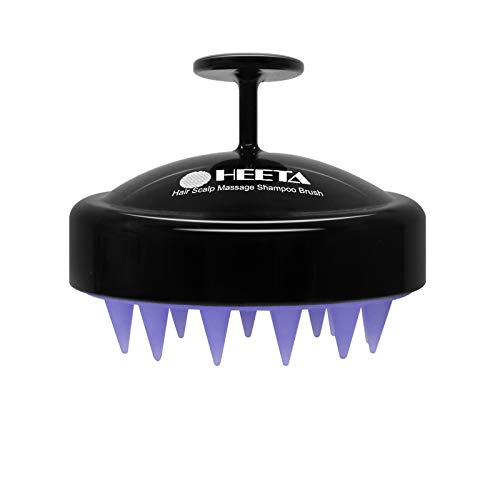
HEETA Scalp Massager Hair Scrubber for Dandruff Removal (Soft Silicone)
 Check Price
Best Budget
Kitsch Scalp Massager Shampoo Brush
 Check Price
Best for Thicker Hair
Tangle Teezer Scalp & Shampoo Brush to Exfoliate & Massage
Written by HairGrowthReviews Editorial Team
Reviewed by Ernesta Malinauskytė, PhD, Director of Hair Research, TRI Princeton
Updated 2026-10-24 · Independently researched · How we review
We may earn a commission when you buy through our links, at no cost to you. As an Amazon Associate we earn from qualifying purchases. How we research
The Short Version
- The best-known study of scalp massage involved only nine healthy men and found thicker hair shafts after 24 weeks of daily massage, but no significant change in hair count.
- The leading theory is mechanical stretch: pressing and moving the scalp may send signals to the cells that control hair growth. Blood flow claims are largely untested.
- Consistency matters more than equipment. Aim for about four to five minutes a day, every day, for at least six months before judging the result.
- A manual silicone brush, your fingertips and an electric massager all do the same basic job. Electric models buy comfort and convenience, not extra growth.
- Massage does not block DHT or reverse scarring. For pattern hair loss, use it alongside minoxidil or finasteride, never instead of them.
On This Page · 10 sections
Does scalp massage help hair growth? It is one of the most appealing ideas in hair care: a free or nearly free habit, done in a few minutes a day, that might make thinning hair look fuller. Social media videos often present it as a natural regrowth method, and scalp massagers are now among the most popular hair tools sold online. The research behind the claim is real, but it is far smaller and more tentative than that reputation suggests.
That gap matters because the people most interested in scalp massage are often those watching their hair thin. Pattern hair loss is progressive, and months spent on a habit with modest evidence are months not spent on a treatment that has been tested in large trials. At the same time, massage is low risk, pleasant and may offer a small benefit, so there is no reason to dismiss it. The sensible position sits between the hype and the cynicism.
Below, we explain the mechanical-stretch hypothesis, what the two main studies did and did not show, whether blood flow is part of the story, how long and how often to massage, and whether a tool is worth buying. We also cover how to combine massage with minoxidil and oils, and where it falls short. If you have already decided to try a tool, our guide to the best scalp massager compares the options, from cheap silicone brushes to electric models.
How Scalp Massage Might Affect Hair: The Mechanical-Stretch Idea
Each hair grows from a follicle, and at the base of that follicle sits a small cluster of specialized cells called the dermal papilla. These cells act as a control center, sending the signals that tell the follicle when to grow, how thick a hair to produce and when to rest. In pattern hair loss, follicles gradually shrink under the influence of the hormone DHT and produce finer, shorter hairs, a process called miniaturization.
The leading theory for how massage could help is mechanical stretch. Cells respond not only to chemical signals but also to physical forces such as pressure, tension and stretching. Laboratory work on dermal papilla cells has suggested that stretching them can change which genes they switch on, including some linked to the hair growth cycle. The idea is that firmly moving the scalp skin transmits a similar, gentler force down to the follicle.
Cells respond not only to chemical signals but also to physical forces such as pressure, tension and stretching.
A related idea concerns scalp tension. Some researchers have proposed that the tight, thin scalp over the crown and top of the head, where pattern hair loss tends to start, may contribute to an unfavorable environment for follicles, and that loosening it through regular massage could help. This is an interesting hypothesis, but it has not been tested in well-controlled human trials.
Both explanations are plausible, but they rest mainly on lab findings and small observations in people. Cells in a dish are not the same as follicles deep in a living scalp, and nobody yet knows how much force reaches the papilla during a typical massage, or how much would be needed to make a lasting difference.
What the Scalp Massage Studies Found
The study most often cited for scalp massage was a small Japanese pilot study in healthy men. Nine participants received four minutes of standardized scalp massage every day for 24 weeks, using a handheld massage device rather than fingertips. At the end, the researchers reported that the hair shafts had become measurably thicker on average, but the number of hairs did not change significantly.
That is an encouraging signal, but the design limits what it can show. Nine men is a very small group. There was no control group of men who did not massage, so changes in season, hair care or measurement could account for some of the result. The men did not have diagnosed hair loss, so the study does not tell us directly what happens in people with thinning hair. And thicker hairs are not the same as new hairs.
And thicker hairs are not the same as new hairs.
The second main source is a survey study of several hundred people with pattern hair loss who were taught a standardized twice-daily scalp massage routine and later asked how their hair had responded. A majority reported that their hair loss had stabilized or that they had seen some regrowth, and people who reported spending more time and effort on the massage tended to report better results.
Self-reported results are the weakest kind of evidence. People who stuck with a routine and liked the outcome are more likely to answer a survey, many respondents were probably using other treatments too, and hair loss naturally waxes and wanes. The pattern of more effort, better reported results is interesting, but it is not the same as a controlled trial with hair counts and photographs.
Put together, the research suggests that daily scalp massage may modestly improve hair thickness and that many people who commit to it feel it helps. It does not show that massage regrows hair in balding areas, and no large, controlled trial has tested it in people with pattern hair loss.
| What the Research Suggests | What It Does Not Show | |
|---|---|---|
| Hair thickness | Existing hairs may get slightly thicker | Large, lasting gains in thickness |
| Hair count | No significant change in the pilot study | New hairs in balding areas |
| Study design | One tiny pilot and one survey | A controlled trial against no massage |
| Population | Healthy men and self-selected survey respondents | Reliable results in women or diagnosed hair loss |
| Effort | More reported effort, better reported results | A proven dose or schedule |
Does Scalp Massage Increase Blood Flow to Hair Follicles?
The most common explanation you will see for scalp massage is that it boosts blood flow to the follicles, delivering more oxygen and nutrients. It sounds intuitive, and rubbing any area of skin does cause temporary redness and warmth as small vessels near the surface widen. But that short-lived effect is not evidence that massage improves hair growth.
There are two gaps in the blood flow argument. First, a few minutes of increased surface circulation fades soon after you stop, and there is little evidence that it produces lasting changes in blood supply to the follicles. Second, poor circulation is not the main driver of pattern hair loss. The core problem is the sensitivity of follicles to DHT, which massage does not change.
poor circulation is not the main driver of pattern hair loss
Minoxidil is sometimes described as a blood flow treatment because it was first developed as a blood pressure drug, and that link has fed the idea that anything improving circulation will grow hair. In fact, how minoxidil works on follicles is more complex than simple vessel widening, and its effects have been demonstrated in large trials. Massage has not had that kind of testing.
The researchers behind the main scalp massage studies have generally pointed to mechanical stretch rather than blood flow as the more likely explanation. So when a product listing claims that a massager stimulates circulation for faster growth, treat it as marketing language rather than an established fact.
How Long and How Often to Massage Your Scalp
The routines that have been studied used short, frequent sessions: about four minutes a day in the pilot study, and twice-daily sessions in the survey study. There is no proven ideal schedule, but a practical target is four to five minutes once or twice a day, every day. Daily consistency appears to matter more than long, occasional sessions.
Use enough pressure to move the scalp skin over the skull, not just to slide your fingers or brush across the hair. Place your fingertips or the massager flat on the scalp, press gently and move in small circles, or push the skin forward and back, then lift and move to a new spot. Work across the whole scalp, with extra time on the crown and top of the head if that is where you are thinning.
Daily consistency appears to matter more than long, occasional sessions.
It should never hurt. Pressure that scratches the skin, pulls hairs or leaves your scalp sore the next day is too much, and irritation can make shedding worse rather than better. Use the pads of your fingers rather than the nails, and choose soft silicone bristles over hard plastic if you use a tool.
Expect to wait. Hair grows slowly, roughly a centimeter a month, and any change in thickness takes months to become visible. The pilot study ran for 24 weeks, so give a daily routine at least six months before deciding whether it has helped. Take photos of your part, crown or hairline in the same light before you start and once a month after, so you are judging changes fairly rather than from memory.
Our #1 pick for scalp massager
HEETA Scalp Massager Hair Scrubber for Dandruff Removal (Soft Silicone)
The default choice: comfortable, cheap and easy to use at every wash. Start here before spending more.
Fingertips, Silicone Massager or Electric: Which Is Best?
Your fingertips are free and work well. They let you feel how much pressure you are using and move the scalp skin directly. Their main drawbacks are that it is easy to drift into scratching with your nails, and many people find it hard to keep up four or five minutes of massage every day with their hands alone.
A manual silicone massager, often sold as a shampoo brush, is the most practical upgrade for most people. Soft silicone bristles spread pressure evenly, are gentle enough for daily use and help distribute shampoo to the scalp. Our best overall pick, the HEETA silicone scalp massager, costs only a few dollars. People with thick or long hair may find a tool with longer, flexible teeth, such as the Tangle Teezer scalp brush, reaches the skin more easily.
Choose the one you will use every day.
Electric massagers do the motion for you with rotating or vibrating heads. Their real advantage is convenience: some people find that a device makes a daily massage feel like a treat rather than a chore, which helps them stick with it. There is no evidence that an electric massager grows more hair than a manual brush or fingertips used consistently, and they cost several times more.
The main study used a device that applied a standardized motion, which is one reason some people assume an electric massager is closer to the research. But the important variable seems to be regular, firm movement of the scalp skin, which any of these options can deliver. Choose the one you will use every day.
| Fingertips | Silicone Massager | Electric Massager | |
|---|---|---|---|
| Cost | Free | A few dollars | Several times more |
| Pressure control | Excellent | Good, evenly spread | Varies by model |
| Effort | Highest | Moderate | Lowest |
| Shower use | Yes | Yes, also spreads shampoo | Only if listed as waterproof |
| Evidence of extra growth | None over other methods | None over other methods | None over other methods |
Combining Scalp Massage With Minoxidil and Oils
Scalp massage is best treated as an add-on to a proven treatment, not a replacement for one. Minoxidil is the only over-the-counter drug the FDA has approved for regrowing hair, and for men, prescription finasteride targets DHT directly. Massage can sit alongside either without any known interaction, and some people find a daily massage habit makes it easier to remember their other treatments.
Timing with minoxidil matters. Apply minoxidil to a dry scalp and let it absorb before you massage vigorously, wash or use a brush, so you do not rub it off or spread it onto your face. The simplest approach is to massage in the shower or before minoxidil, then apply minoxidil to a clean, dry scalp afterward. Gently working minoxidil in with your fingertips during application is fine.
Scalp massage is best treated as an add-on to a proven treatment, not a replacement for one.
Oils pair naturally with massage, and most oil routines involve rubbing the oil into the scalp for a few minutes. Rosemary oil has one small trial behind it, which we cover in our article on whether rosemary oil really grows hair, and it is possible that part of the benefit people report comes from the massage itself. Always dilute essential oils in a carrier oil and patch test a new blend before using it on your scalp.
Avoid stacking too many things at once. A heavy oil left on the scalp can make minoxidil absorb less predictably, and mixing essential oils into minoxidil solution is not recommended. If you use both, apply oil as a pre-wash treatment on a separate schedule, and keep your minoxidil step simple and consistent.
What Scalp Massage Cannot Do
Scalp massage does not block DHT, the hormone that drives pattern hair loss in both men and women. Even if it modestly thickens existing hairs, the underlying process of miniaturization keeps going, so massage alone is unlikely to halt progressive thinning. Follicles that have been lost entirely will not be revived by pressure or stretching.
It will not fix hair loss that has a medical cause. Sudden or heavy shedding, patchy bald spots, a red, scaly or painful scalp, and thinning that comes with fatigue, weight changes or irregular periods all need a doctor. Conditions such as alopecia areata, thyroid disease, iron deficiency and scarring alopecias need diagnosis and specific treatment, and some scarring types can cause permanent loss if left untreated.
Follicles that have been lost entirely will not be revived by pressure or stretching.
It is also not right for every scalp. Skip massage over open cuts, active infections, sunburn or a scalp freshly treated with microneedling. If you have a flaring inflammatory condition such as psoriasis or seborrheic dermatitis, or a scarring form of hair loss, ask a dermatologist before adding firm massage. And if your hair is fragile, chemically treated or worn in tight styles, be gentle so you do not add breakage or traction.
Finally, massage will not show results quickly. Anyone selling a massager with promises of visible regrowth in a few weeks is going well beyond the evidence. Treat massage as a pleasant, low-cost habit that may help a little, and judge it over months, not days.
Frequently Asked Questions
Does scalp massage regrow hair on bald spots?
There is no good evidence that it does. The main pilot study found thicker hair shafts but no significant change in hair count, and the survey study relied on self-reported results. Follicles that have stopped producing hair are unlikely to be revived by massage, and patchy bald spots should be checked by a dermatologist.
How long does scalp massage take to work?
Plan on at least six months of daily massage before you judge it. The pilot study ran for 24 weeks, and hair grows slowly, so any change in thickness takes months to show. Take monthly photos in the same light so you can compare fairly.
Is it okay to massage my scalp every day?
Yes, for most people. The routines that have been studied were daily or twice daily. Use firm but painless pressure, avoid scratching with your nails and stop if your scalp becomes sore, red or irritated. Skip massage over cuts, infections, sunburn or active flare-ups.
Can scalp massage cause hair loss?
Gentle massage does not cause hair loss, and you may notice a few hairs come away that were already in their shedding phase. Very rough massage, scratching or tugging can irritate the scalp and break fragile hair, so ease off if you see more hair than usual on the brush or in the drain.
Is an electric scalp massager better than a manual one?
Not for hair growth. There is no evidence that an electric massager produces more hair than a manual silicone brush or your fingertips used consistently. Electric models are more convenient and some people find them more relaxing, which can help with consistency, but a cheap manual brush does the same basic job.
Should I massage before or after applying minoxidil?
Before is simplest. Massage in the shower or on a dry scalp first, then apply minoxidil to a clean, dry scalp and let it absorb. Vigorous massage straight after applying minoxidil can rub it off or spread it to your face. Gently working it in with your fingertips is fine.
Does scalp massage work for women?
It may, but there is little direct evidence. The pilot study included only men, and the survey study relied on self-reports. Massage is a reasonable low-risk add-on for women with thinning hair, but 5% minoxidil foam is the approved treatment for female pattern hair loss, and a doctor should rule out causes such as low iron or thyroid problems.
The Bottom Line
Scalp massage may make existing hairs slightly thicker, but the evidence comes from a nine-person pilot study and a self-reported survey, not controlled trials. It is cheap, pleasant and low risk, so it is worth trying as a daily habit for at least six months. Use it alongside minoxidil or finasteride, never instead of them, and see a dermatologist for sudden or patchy loss.
Related Questions
Buyer's Guides
Hair Growth & Hair Loss
Best Rosemary Oil for Hair Growth
Rosemary oil's reputation rests on one small trial against 2% minoxidil. It is a promising, low-cost experiment, not a proven treatment. Here is how to choose a pure oil or a ready-made blend, and how to use it safely.
Hair Growth & Hair Loss
Best Minoxidil for Men
Every product here contains 5% minoxidil, the only topical hair regrowth drug the FDA has approved for men. What separates them is the vehicle, the irritation risk, and what you pay per month for the next decade.
Hair Care
Best Scalp Scrub
A good scalp scrub clears product buildup, excess oil and dead skin that shampoo leaves behind. It will not regrow hair, and the wrong one can irritate. These are the physical and chemical scalp exfoliants worth using, and who should skip them.