Our Picks at a Glance
- 1
 Check Price →
Best Overall
Wet Brush Original Detangler Hair Brush (Black) - 2
 Check Price →
Best Wide Tooth Comb
Kent 10T Large Detangler Comb, Handmade Wide Tooth Comb, Saw-Cut and Hand Polished - 3
 Check Price →
Best for Fine Curls and Waves
Tangle Teezer Fine Ultimate Detangler Brush for Fine Hair - 4
 Check Price →
Best Comb for Wavy Hair
Paul Mitchell Detangler Comb, Wide Tooth (Wet or Dry Hair) - 5
 Check Price →
Best Shower Scalp Brush
Tangle Teezer Scalp & Shampoo Brush to Exfoliate & Massage - 6
 Check Price →
Best for Blow-Drying
Wet Brush Pro Flex Dry Paddle Brush
The Short Version
- Brush or comb curly hair only when it is wet and coated in conditioner. Dry brushing breaks up curls, causes frizz and snaps strands.
- The Wet Brush Original Detangler is our best overall pick: flexible bristles, low price and easy to use in the shower.
- Wide tooth combs like the Kent 10T are gentler for tight coils, thick curls and very tangled hair.
- Always start at the ends and work up toward the roots in small sections. Never rake from the scalp down through a knot.
- Wash-day shedding is normal for curly hair, because shed hairs stay trapped between washes. Sudden, patchy or painful hair loss needs a dermatologist.
On This Page · 12 sections
The best brush for curly hair is a flexible-bristle detangling brush, like the Wet Brush Original Detangler, used only on wet hair that is saturated with conditioner. For tight coils and very thick curls, a wide tooth comb such as the Kent 10T is often the gentler choice. The rule that matters more than any product is simple: do not dry-brush curls. Brushing curly hair when it is dry separates the curl clumps into a cloud of frizz, disrupts the pattern you want to keep, and stretches and snaps strands that are already more fragile than straight hair.
That is why so many curly-haired people hear that they should never brush their hair at all. It is half right. A brush on dry curls is a bad idea, but a flexible detangling brush pulled through wet, slippery, conditioned hair can be one of the fastest and gentlest ways to remove knots and shed hair, and many curl routines use one in the shower. Others prefer a wide tooth comb or finger detangling, especially for coily hair. All three can work; dry brushing is the one approach that reliably causes damage.
We ranked six tools on how gently they detangle wet curly hair, how well they suit different curl types and densities, build quality, ease of use in the shower and value. This is research-based, not a hands-on test: we relied on product design, listing details, dermatology guidance on breakage and the broad pattern of buyer feedback. If you also need products to go with your tools, see our guides to the best hair products for curly hair and the best hair detangler.
Should You Brush Curly Hair? Only Wet, Only With Conditioner
Yes, you can brush curly hair, but only when it is wet and coated in conditioner, and only with the right tool. The advice to never brush curls comes from what happens when people brush them dry. Curly hair forms clumps of strands that twist together into a pattern. A brush pulled through dry curls separates those clumps into individual hairs, which then puff out into frizz and lose their shape until the next wash.
Dry brushing is also hard on the hair itself. Curly strands have bends and twists along their length, and each bend is a point where the outer cuticle is more exposed and the strand is more likely to break under tension. Dry hair has little slip, so a brush catches on those points and stretches the hair until it snaps. The result is split ends, short broken pieces around the crown and hairline, and curls that seem to stop growing at a certain length.
Yes, you can brush curly hair, but only when it is wet and coated in conditioner, and only with the right tool.
Wet, conditioned hair behaves very differently. Conditioner coats the strands and reduces friction, so knots slide apart instead of tightening. Wet hair is somewhat more fragile than dry hair, which is why the tool and the technique still matter: flexible bristles or wide teeth, small sections, and work from the ends up. With plenty of slip, a detangling brush in the shower can be faster and gentler than wrestling with knots later.
There is one more benefit to detangling on wash day. Curly hair holds on to shed hairs, because they get trapped in the curl pattern instead of falling out. Gently detangling with conditioner releases them in one go, which is why wash day can produce a surprising handful of hair. That is usually normal shedding, not hair loss, as we explain below.
What to Look For in the Best Brush for Curly Hair
Flexibility comes first. The best detangling brush for curly hair has thin bristles or soft teeth that bend when they meet a knot. Stiff nylon or plastic bristles with ball tips, the kind found on many cheap paddle brushes, push straight through resistance, and with curly hair that means ripping. If you press the bristles with your palm and they barely move, the brush is too stiff for curls.
Spacing matters too. Widely spaced bristles or teeth let curl clumps pass through without being split apart, which keeps definition and reduces frizz. Dense bristles, such as boar bristle brushes, are designed to distribute oil and smooth straight hair. They are good at that job and poor at detangling curls; they also tend to brush curls into frizz.
Then think about your curl type and density. Loose waves and fine curls do well with softer brushes or a basic wide tooth comb. Thick, dense curls benefit from a larger brush that covers more hair per stroke. Tight coils often do best with finger detangling followed by a smooth, saw-cut wide tooth comb, since even flexible brushes can pull on very tight curl patterns.
Finally, consider where you will use it. Most curl detangling happens in the shower, so the tool should be fine getting wet, easy to grip with slippery hands, and simple to rinse. Combs and plastic brushes are easier to keep clean than cushioned brushes, which can trap water and product. Clean any tool regularly by pulling out shed hair and washing it with a little shampoo.
| Look For | Avoid | |
|---|---|---|
| Bristles or teeth | Thin, flexible bristles or smooth wide teeth | Stiff, ball-tipped bristles |
| Spacing | Wide spacing that keeps curl clumps together | Dense boar or mixed bristles |
| Comb finish | Saw-cut or polished, no seams | Rough molded seams along each tooth |
| Shower use | Water-safe, easy to grip and rinse | Cushions that trap water and product |
The 6 Best Brushes and Combs for Curly Hair
We favored tools with flexible bristles or smooth, widely spaced teeth that ease knots apart on wet, conditioned hair. We ranked them on gentleness, how well they suit different curl types, shower-friendliness, build quality and value. None of these should be used to brush curls dry.
Wet Brush Original Detangler Hair Brush (Black)
Flexible Detangling Brush
Best for: Most curl types, detangled in the shower with conditioner
- Type
- Paddle-style detangling brush
- Bristles
- Thin, flexible bristles
- Use on
- Wet hair (and all textures, per listing)
- Price tier
- Budget
The Wet Brush Original is the detangling brush most curly-haired people end up trying first, and there is a good reason it tops this list. Its thin, flexible bristles bend when they hit resistance instead of ripping through it, so a knot gets eased apart rather than torn. That flex is the single most important feature in a brush for curly hair, and the Original has it at a budget price.
Use it in the shower after you apply a generous amount of conditioner. Divide the hair into a few sections, hold each one above where you are brushing so you are not tugging the scalp, and work from the ends upward in short strokes. The open paddle shape covers a lot of hair, which makes it quick on long or thick curls, and the light plastic body does not mind getting wet.
It is not a styling or curl-defining brush, and it will not clump curls the way a Denman-style brush can. On very tight coils, some people find any brush pulls more than a wide tooth comb or their fingers. Skip it if your hair is type 4 and tangles into tight knots; start with the Kent 10T instead. For most wavy and curly hair, it is the simplest place to start.
What We Liked
- Flexible bristles bend around knots instead of tearing them
- Inexpensive and widely available
- Fast on long and thick curls
What We Didn't
- Not a curl-defining or styling brush
- Can still pull on tight coils
- Should not be used on dry curls
The Bottom Line
The best brush for curly hair for most people: cheap, flexible and ideal for detangling in the shower with conditioner.
Kent 10T Large Detangler Comb, Handmade Wide Tooth Comb, Saw-Cut and Hand Polished
Wide Tooth Comb
Best for: Tight curls, coils and thick hair that snags on brushes
- Type
- Large wide tooth comb
- Construction
- Handmade, saw-cut, hand polished (per listing)
- Use on
- Wet or dry hair (per listing)
- Price tier
- Mid-range
Kent is a long-established British brush and comb maker, and the 10T is its large detangling comb. The listing describes it as handmade, saw-cut and hand polished. That matters more than it sounds: cheap molded combs often have a seam left along each tooth from the mold, and that tiny ridge can catch and roughen hair. A saw-cut, polished comb has smooth teeth with no seam, which is exactly what you want running through fragile curls.
A wide tooth comb is the gentlest tool for tight curls and coils because the widely spaced teeth let curl clumps pass through without being split apart. Use it on wet hair with plenty of conditioner, or on hair coated in a slippery leave-in, starting at the ends and moving up in small sections. Many people with type 4 hair finger detangle first to remove large knots, then follow with a comb like this.
It is slower than a brush on long, dense hair, and it costs more than a basic drugstore comb. The listing says it works on wet or dry hair, but for curls we would still stick to wet or well-conditioned hair. Skip it if your hair is wavy and fine and you want speed; a flexible brush will be quicker. Buy it if brushes always seem to snag.
What We Liked
- Seamless, polished teeth are gentle on fragile curls
- Wide spacing keeps curl clumps together
- Durable, well-made comb from an established maker
What We Didn't
- Slower than a brush on long, dense hair
- Costs more than a basic plastic comb
- Needs plenty of slip to work well
The Bottom Line
The gentlest pick for coils and thick curls, and the comb we would choose if brushes keep snagging your hair.
Tangle Teezer Fine Ultimate Detangler Brush for Fine Hair
Two-Tier Detangling Brush
Best for: Fine, fragile curls and waves that break easily
- Type
- Handled detangling brush
- Teeth
- Two-tier, soft-flex teeth (per listing)
- Made for
- Fine hair (per listing)
- Price tier
- Budget to mid-range
Tangle Teezer built its name on detangling brushes with short, flexible teeth, and the Ultimate Detangler adds a handle to that design, which makes it easier to grip in the shower than the original handheld shape. This Fine version is designed specifically for fine hair, with what the listing calls patented two-tier, soft-flex teeth that detangle and reduce breakage.
That makes it a strong match for fine curls and loose waves. Fine curly hair is a tricky combination: the curl pattern means it tangles, but each strand is thin and snaps with little force. Softer, shorter teeth glide over the surface of the hair and work knots loose gradually, which suits it better than a stiffer brush. Use it on wet hair with conditioner, in sections, from the ends up.
Thick, coarse or tightly coiled hair will likely find it too soft to get through dense sections, and the shorter teeth do not reach as deep into a thick head of hair. Skip it if your curls are dense or coarse; the Wet Brush Original or Kent 10T will do more. Buy it if your waves or curls are fine and you have noticed short, broken pieces after detangling.
What We Liked
- Soft-flex teeth designed for fine hair
- Handle makes it easy to use in the shower
- Works knots loose gradually with less force
What We Didn't
- Too soft for thick or coarse curls
- Short teeth do not reach deep into dense hair
- Not a curl-defining brush
The Bottom Line
The best detangling brush for curly hair that is fine, fragile or prone to snapping.
Paul Mitchell Detangler Comb, Wide Tooth (Wet or Dry Hair)
Wide Tooth Comb
Best for: Wavy and loose curly hair, and anyone who wants a simple budget comb
- Type
- Wide tooth detangling comb
- Use on
- Wet or dry hair (per listing)
- Brand
- Salon haircare brand
- Price tier
- Budget
Paul Mitchell's Detangler Comb is a straightforward wide tooth comb from a well-known salon brand, and it is one of the cheapest ways to detangle curls gently. The listing says it detangles wet or dry hair; for wavy and curly hair, we recommend using it on wet hair with conditioner or a leave-in for the best slip and least frizz.
It is our pick for wavy hair because waves are easy to brush straight. A full brush tends to pull loose S-shaped waves flat, while a wide tooth comb removes tangles and leaves the wave pattern mostly intact. Comb through in the shower, then scrunch in your styler and leave the waves alone as they dry. It is also a good comb to keep in a gym bag or car.
It is a basic molded comb, so it is not as finely finished as the hand-polished Kent, and on very thick, coily hair it will be slow. Skip it if your hair is dense and tangles badly; spend a little more on the Kent 10T. Buy it if you have waves or loose curls and want a cheap, effective comb.
What We Liked
- Inexpensive comb from a known salon brand
- Keeps wave patterns intact better than a brush
- Light and easy to carry
What We Didn't
- Not as finely finished as a saw-cut comb
- Slow on thick, coily hair
- Needs conditioner or leave-in for best results
The Bottom Line
The best comb for wavy hair on a budget, and a sensible backup comb for any curl type.
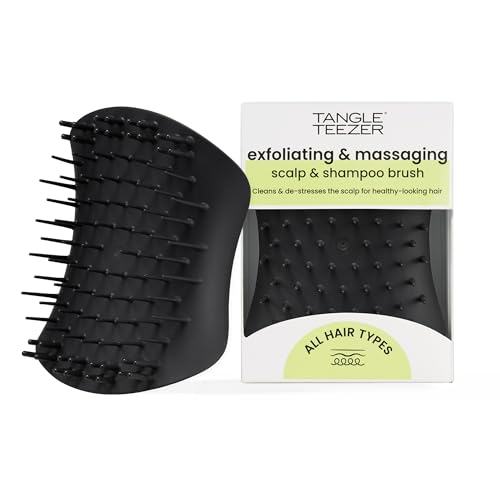
Tangle Teezer Scalp & Shampoo Brush to Exfoliate & Massage
Scalp and Shampoo Brush
Best for: Curly-haired people who wash less often and want a cleaner scalp
- Type
- Handheld scalp brush
- Purpose
- Exfoliate and massage (per listing)
- Use
- In the shower with shampoo
- Price tier
- Budget
This is not a detangler, and we include it because curly hair care has two separate jobs: detangling the lengths and cleaning the scalp. Many people with curls wash only once or twice a week, or use a gentle co-wash, which can leave oil, product and flakes sitting on the scalp. A scalp brush helps you work shampoo in at the roots without scrubbing your curls into a tangled mess with your fingernails.
Tangle Teezer's version is a palm-held brush that the listing says exfoliates and massages. Use it on the scalp only, with shampoo, in small circular or back-and-forth movements, then rinse. Keep the lengths out of it; scrubbing the ends is how wash-day tangles start. A scalp massage feels pleasant, but no brush has been shown to regrow hair.
Skip it if your scalp is sore, inflamed or has open spots, or if you have a scalp condition that a dermatologist is treating. It also does nothing to detangle, so you will still need one of the brushes or combs above. Buy it if your scalp feels oily or itchy between washes and your fingers are not getting it clean.
What We Liked
- Cleans the scalp without tangling the lengths
- Helps shampoo reach the roots through thick curls
- Inexpensive and easy to grip
What We Didn't
- Does not detangle
- Not for sore or inflamed scalps
- Massage does not grow hair
The Bottom Line
A useful shower brush for the scalp, paired with a separate detangler for the lengths.
Wet Brush Pro Flex Dry Paddle Brush
Vented Detangling Brush
Best for: Curly-haired people who blow-dry their hair smooth or straight
- Type
- Vented, flexible brush
- Bristles
- Flexible detangling bristles
- Use with
- Hair dryer
- Price tier
- Budget
The Pro Flex Dry is Wet Brush's blow-drying version of its detangler, with a vented, flexing head so warm air can pass through as you dry. It ranks last on this list for a specific reason: it is designed for a style that changes curly hair. Brushing curls while you blow-dry them stretches out the pattern and gives a smoother, straighter result, which is great if that is the look you want and the opposite of what most curl routines aim for.
If you do blow out your curls, this is a reasonable tool. Detangle in the shower first with conditioner, apply a heat protectant, rough-dry until the hair is mostly dry, then use the brush with a moderate heat setting. The vents let air through, which can shorten drying time and reduce how long your hair sits under heat.
Skip it if you wear your hair curly. For wash-and-go styles, air drying or a diffuser keeps the curl pattern intact, and a regular detangler like the Wet Brush Original is all you need. Buy it if you switch between curly and smooth styles and want one brush for the blow-dry days.
What We Liked
- Vented design lets air through while drying
- Flexible bristles detangle as you dry
- Inexpensive
What We Didn't
- Brushing while drying stretches out curls
- Little use for wash-and-go styles
- Not a curl-defining brush
The Bottom Line
Only worth buying if you blow your curls out smooth. For curly styles, choose the Wet Brush Original instead.
Brush vs. Wide Tooth Comb vs. Fingers for Curls
There is no single right answer to brush vs. wide tooth comb for curls; it depends on your hair, your patience and how tangled it gets. All three methods work well on wet hair with plenty of conditioner, and many people combine them. The real difference is how much control you have and how much force each one applies to the hair.
Finger detangling is the gentlest option, because you can feel every knot and separate it slowly. It is popular for type 4 coily hair and for anyone dealing with breakage. The downside is time; on long, thick hair it can take a while, and it does not remove as many shed hairs as a tool, so you may still get tangles later.
A flexible detangling brush is the fastest of the three and removes shed hairs most efficiently, which suits wavy, loose curly and thick hair that gets matted.
A wide tooth comb is the next step up. It is quick enough for most heads of hair, keeps curl clumps together, and is the safest tool for tight curls. A smooth, seamless comb is worth the small extra cost. A flexible detangling brush is the fastest of the three and removes shed hairs most efficiently, which suits wavy, loose curly and thick hair that gets matted. It is also the easiest to overdo, so go slowly.
A practical routine for many curly heads: apply conditioner, finger detangle any large knots, then follow with a wide tooth comb or detangling brush in sections. If you notice short broken hairs in your sink or brush, move toward gentler methods; if detangling takes forever and you still find knots, a brush may save time.
| Gentleness | Speed | Best For | |
|---|---|---|---|
| Fingers | Gentlest | Slowest | Coils, breakage-prone hair |
| Wide tooth comb | Very gentle | Moderate | Tight curls, waves |
| Flexible detangling brush | Gentle if used wet | Fastest | Thick, long or matted curls |
| Regular paddle brush | Harsh on curls | Fast | Not recommended for curls |
How to Detangle Curly Hair Without Breakage
Start with slip. Wet your hair thoroughly, then apply a generous amount of conditioner, more than you would use just to condition. Work it through the lengths with your fingers so every section is coated. Some people prefer to detangle with a leave-in or a dedicated detangling spray instead; the goal is the same, hair that feels slippery rather than squeaky.
Section the hair. Split it into four or more sections and clip or twist the ones you are not working on. Smaller sections mean less hair for the brush to catch at once, which means less tension. For each section, hold the hair a few inches above the part you are detangling. That way any pull is absorbed by your hand rather than your scalp.
Never start at the scalp and drag the tool down through a knot, which pulls the tangle tighter and can snap strands.
Work from the ends up. Begin at the bottom inch or two and brush or comb until it is smooth, then move a little higher and repeat, until you reach the roots. Never start at the scalp and drag the tool down through a knot, which pulls the tangle tighter and can snap strands. If you hit a stubborn knot, add more conditioner and pick it apart with your fingers.
Rinse and style without touching your curls with the brush again. Once hair is detangled, you can apply your leave-in and styler and then leave it alone; brushing after styling breaks up clumps. Between washes, refresh with water or a light spray and use your fingers, not a brush. For overnight protection, a satin bonnet or a silk pillowcase reduces friction and morning tangles.
Shower Brushes, Scalp Brushes and Curl-Defining Brushes
Detangling brushes are not the only brushes sold for curly hair, and it helps to know what the other types do. A shower brush is usually just a detangling brush designed to be used wet; most of the picks above fall into this group. A scalp brush, like the Tangle Teezer on our list, is a different tool: it has short, soft nubs for working shampoo into the scalp and does not detangle the lengths.
Curl-defining or styling brushes are a third category. Denman-style brushes, with rows of firm bristles set in a rubber cushion, are popular in curly routines for brushing styling gel or cream through wet hair to form defined, uniform curl clumps. Some people pull out a few rows of bristles to make them gentler or to get bigger clumps. These are styling tools, not detanglers, and they work best on hair that has already been detangled. We did not include them on this list, but if you want more defined curls, they are worth a look.
These are styling tools, not detanglers, and they work best on hair that has already been detangled.
Another popular technique is brush styling with a flexible brush while hair is soaking wet and full of product, sometimes with a twisting motion to encourage clumps. Results vary a lot by curl type. If you try it, keep the hair wet and coated, use light pressure, and stop if you see more frizz or breakage.
What you should avoid on curls is any brush used to brush dry hair into shape, plus heated brushes and round brushes unless you are deliberately blowing your curls out smooth. Those tools stretch the curl pattern and add heat and tension.
Wash-Day Shedding, Breakage and When to See a Dermatologist
Many people with curly hair are alarmed by how much hair comes out on wash day. Usually there is a simple explanation. Everyone sheds hair every day as part of the normal hair growth cycle; dermatologists commonly cite 50 to 100 hairs a day as typical. With straight hair, those hairs fall out as you go. With curly hair, they get caught in the curl pattern and stay there until you detangle, so several days of shedding can come out at once.
Shedding and breakage look different. A shed hair is full length and usually has a small white bulb at one end. A broken hair is shorter, with no bulb, and often has a frayed or blunt end. If you are finding lots of short, broken pieces, the cause is usually mechanical: dry brushing, rough detangling, tight styles, heat or chemical damage. A gentler tool and technique can make a real difference there.
No brush or comb grows hair.
No brush or comb grows hair. A gentle tool helps you keep more of the hair you have by reducing breakage, which can make curls look longer and fuller over time. It does not treat pattern hair loss. If your part is widening or your crown is thinning, topical minoxidil is the only over-the-counter treatment approved to regrow hair, and a dermatologist can discuss prescription options.
See a dermatologist if shedding is sudden and heavy, if you notice bald patches, or if your scalp is itchy, painful, scaly or scarring. Tight braids, ponytails and extensions can cause traction alopecia along the hairline, which can become permanent if the tension continues. Hair loss after illness, childbirth, stress or a major diet change is also worth discussing with a doctor.
Compared Side by Side
| Product | Type | Best Curl Type | Use On | Best For |
|---|---|---|---|---|
| Wet Brush Original Detangler | Flexible brush | Waves to thick curls | Wet, conditioned hair | Best overall |
| Kent 10T Wide Tooth Comb | Saw-cut comb | Tight curls and coils | Wet, conditioned hair | Gentlest detangling |
| Tangle Teezer Fine Ultimate | Soft-flex brush | Fine curls and waves | Wet, conditioned hair | Fragile hair |
| Paul Mitchell Detangler Comb | Wide tooth comb | Waves, loose curls | Wet, conditioned hair | Budget comb |
| Tangle Teezer Scalp Brush | Scalp brush | All curl types | Scalp, with shampoo | Scalp cleansing |
| Wet Brush Pro Flex Dry | Vented brush | Curls worn blown out | While blow-drying | Smooth blowouts |
Ready to Buy? Our Picks Again
- 1Check Price →
Best Overall
Wet Brush Original Detangler Hair Brush (Black) - 2Check Price →
Best Wide Tooth Comb
Kent 10T Large Detangler Comb, Handmade Wide Tooth Comb, Saw-Cut and Hand Polished - 3Check Price →
Best for Fine Curls and Waves
Tangle Teezer Fine Ultimate Detangler Brush for Fine Hair - 4Check Price →
Best Comb for Wavy Hair
Paul Mitchell Detangler Comb, Wide Tooth (Wet or Dry Hair) - 5Check Price →
Best Shower Scalp Brush
Tangle Teezer Scalp & Shampoo Brush to Exfoliate & Massage - 6Check Price →
Best for Blow-Drying
Wet Brush Pro Flex Dry Paddle Brush
Common Mistakes to Avoid
Brushing Curls When They Are Dry
This is the mistake that gave brushes a bad name among curly-haired people. Dry brushing separates curl clumps into frizz, wrecks definition until the next wash and snaps strands at their weakest bends. Detangle only on wet hair coated in conditioner, and use your fingers to refresh curls between washes.
Starting at the Roots
Dragging a brush from the scalp down pushes every tangle into a tighter knot at the ends, then rips through it. Always start at the bottom inch or two, smooth that section, and work upward a little at a time. Hold the hair above where you are working so the scalp does not take the strain.
Skimping on Conditioner
Detangling without enough slip is where most breakage happens. If the hair feels squeaky or the tool catches, add more conditioner or a detangling spray before you continue. A generous amount on wash day is cheaper than the damage from forcing a brush through hair with no lubrication.
Using a Stiff Paddle or Boar Bristle Brush
Standard paddle brushes with stiff ball-tipped bristles and dense boar bristle brushes are designed for straight hair. On curls they tear through knots and brush the pattern into frizz. Choose a flexible detangling brush or a smooth wide tooth comb, and save boar bristles for smoothing straight styles.
Mistaking Wash-Day Shedding for Hair Loss
Curly hair traps shed hairs between washes, so detangling releases days of normal shedding at once. A handful of full-length hairs with tiny bulbs is often normal. Short broken pieces suggest rough handling. Sudden heavy shedding, bald patches or a painful scalp need a dermatologist, not a new brush.
Frequently Asked Questions
What is the best brush for curly hair?
The Wet Brush Original Detangler is our best overall pick because its flexible bristles bend around knots and it is cheap and easy to use in the shower with conditioner. For tight coils or thick curls, the Kent 10T wide tooth comb is gentler, and the Tangle Teezer Fine Ultimate Detangler suits fine, fragile curls.
Should you brush curly hair?
Only when it is wet and coated in conditioner, and only with a flexible detangling brush or wide tooth comb. Brushing dry curls breaks up the curl pattern, causes frizz and snaps strands. Detangle on wash day, working from the ends up in sections, then leave curls alone as they dry.
What is the best detangling brush for curly hair?
A brush with thin, flexible bristles that bend when they meet resistance. The Wet Brush Original is the best all-round choice, while the Tangle Teezer Fine Ultimate Detangler has softer teeth for fine curls. For very tight curls, many people get better results with a smooth wide tooth comb or finger detangling.
Is a brush or a wide tooth comb better for curls?
A wide tooth comb is gentler and keeps curl clumps together, so it is usually better for tight curls, coils and breakage-prone hair. A flexible detangling brush is faster and removes shed hair more efficiently, which suits thick, long or wavy hair. Both should be used on wet, conditioned hair.
What is the best comb for wavy hair?
A simple wide tooth comb, such as the Paul Mitchell Detangler Comb, is ideal for wavy hair because it removes tangles without pulling loose waves flat the way a full brush can. Comb through in the shower with conditioner, apply your styler, then scrunch and let the waves dry without touching them.
What is the best brush for curly hair for men?
Most men with short curly hair do not need a brush at all. Finger detangling or a wide tooth comb like the Kent 10T or Paul Mitchell comb, used in the shower with conditioner, keeps curls defined. For longer curls, the Wet Brush Original works well. Avoid dry brushing, which turns short curls into frizz.
Why does so much hair come out when I detangle my curls?
Curly hair traps hairs that shed naturally between washes, so detangling releases several days of normal shedding at once. Dermatologists commonly cite 50 to 100 hairs a day as typical. If you see lots of short broken pieces, handle your hair more gently; sudden heavy shedding or bald patches should be checked by a dermatologist.
The Bottom Line
The best brush for curly hair is a flexible detangler used only on wet, conditioned hair, and the Wet Brush Original is the easiest place to start. Choose the Kent 10T comb for tight coils, the Tangle Teezer Fine for fragile curls and the Paul Mitchell comb for waves. Whatever you use, work from the ends up and never brush curls dry.
More Buyer's Guides
Hair Care
Best Hair Products for Curly Hair
Curly hair needs more moisture, gentler cleansing and a product that holds the curl pattern without turning it stiff. These are the curl creams, gels, leave-ins and co-washes worth buying, matched to the curls they suit.
Hair Care
Best Hair Detangler
Most breakage happens while you detangle. The right detangler adds slip so knots slide apart instead of snapping, and the right tool spreads the pull across the hair. Here is what works for straight, curly, kinky and 4C hair, and for tender-headed kids.
Hair Care
Best Hair Products for Fine Curly Hair
Fine curls are dry like other curls but collapse under the rich creams and butters made for thick hair. These are the light gels, foams, leave-ins and wash-day basics that give fine and thin curls definition while keeping volume at the root.
Hair Care
Best Products for Wavy Hair
Wavy hair sits between straight and curly, and most curl products are built for the curly end. The result is waves that go limp, greasy or stringy. These are the light gels, mousses, leave-ins and shampoos that suit waves, plus the routine that makes them work.
Hair Care
Best Leave-In Conditioner
A good leave-in detangles, softens and cuts down on the breakage that makes hair look thinner than it is. The wrong one weighs fine hair flat or leaves curls thirsty. Here is how to pick by texture, and the formulas worth buying.
Hair Tools
Best Hair Brush for Thinning Hair
No brush grows hair. But the wrong brush, used the wrong way, snaps fragile strands and makes thin hair look thinner. Here is how to choose a gentle brush or comb and use it so every strand you have stays put.